July 23, 2016

Superheroes Of The Ancient World


Over the past few years, even the most ardent comic book nerd might have wondered if there were too many superhero movies playing in the local multiplex.

For every Iron Man, or Avengers, there have been a couple of less-than Fantastic Fours and enough dubious Hulks to smash the sternest spirit. Studios keep making these films because they know audiences will flock to see them, even if the heroes include a raccoon and a tree. So the question this poses is: why are we so drawn to superhero stories? And since when?

The answer to the second question is more brief than the first. 

Superheroes have existed for as long as stories, before writing and across every culture from which we can find evidence. Fionn mac Cumhaill built the Giant’s Causeway in Northern Ireland, and Gilgamesh defeated Humbaba in Mesopotamia. Rama was exiled from Ayodhya in India, while Beowulf slew Grendel and Grendel’s mother in Scandinavia. And that’s before you think about the ancient Greeks, who boasted a plethora of heroes to match any collection from Marvel or DC.


Many of today’s most popular superheroes have roots in ancient characters – Wonder Woman, like Hippolyta, is one of the Amazons, a female warrior race (Credit: Warner Bros)

The rules about what makes a superhero are pretty flexible. Superman is an alien, pre-empted by almost two millennia by the Assyrian satirist Lucian who wrote in his True Stories of extra-terrestrial armies engaged in a war. 

Spider-Man was bitten by a radioactive spider, and Bruce Banner was dosed with gamma rays: in other words, they are ordinary human beings with an extra power imposed upon them. The ancients used a similar narrative device, but with semi-divinity as the explanation, rather than science: Perseus, for example, is a hero because his father is Zeus. Wonder Woman, like Hippolyta and Penthesilea before her, is an Amazon, and so also semi-divine.

Bruce Wayne and Tony Stark’s superpowers are their limitless credit cards, which also explains why Agamemnon – least heroic of all heroes, surely – is so concerned about acquiring more booty than other Greek hero during the Trojan War: money is power. 

But perhaps my favourite subgroup of superheroes includes Hawkeye and Green Arrow, whose superpower is ‘being especially good with a bow and arrow’. This ties them neatly to the wiliest of all ancient heroes, Odysseus. After a 20-year absence from his home of Ithaca, he proves his identity to those who thought him long dead by stringing a complex bow and shooting an arrow through twelve axe-heads.

Every superhero has his origin story, and a surprisingly large number of modern ones owe those origins to myths of gods and heroes who existed millennia before their cultural descendants. Even Ant-Man isn’t a completely recent phenomenon: Zeus turned himself into an ant, as part of his scheme to have sex with every pretty girl in the ancient world while disguised as an array of different creatures. 
Leda was ravished by him in swan form; poor Eurymedusa was accosted by him as an ant. Achilles’ warriors, the Myrmidons, legendarily owe their name to this union (the Greek word for an ant is myrmex): they too are Ant-men.


Comics and classics
So that brings us back to the first question, which is rather more complicated: what is it about the superhero narrative that has such a primal appeal we’ve been telling stories about men and women with superpowers for as long as we’ve told stories? For the ancients, heroes and gods acted as a kind of bridge between what they could understand and explain, and what they could not. 

For example, ancient Greeks and Romans experienced large numbers of earthquakes; they knew the ground shook, but they could not possibly have guessed the existence of tectonic plates. So they extrapolated: a light, wooden table would shake if you stamped your foot next to it, on a wooden floor. When buildings shook, it made sense then that something very powerful was stamping on the ground somewhere. Thus, Poseidon acquired his honorific title ‘Earth-shaker’. The idea of a god lurking beneath the ocean smacking his trident into the seabed may seem like a fanciful explanation to us. But as a way of explaining the information available to the ancients, it’s not bad.


Some Marvel characters aren’t just indirectly inspired by antiquity – The Avengers’ Thor, and his brother Loki, are supposed to be the gods of Norse myths (Credit: Disney/Marvel)

And heroes in the Iliad, Odyssey and Aeneid – the epic poems of the Trojan War and its aftermath – often have an intimate connection to the gods that shapes their heroic stories. 

Achilles is the son of Thetis (a sea-nymph for whom Zeus has an especially soft spot). Aeneas is the son of Venus, and though Odysseus boasts mortal parentage, he is the favourite of Athena (and bête-noire of Poseidon). 

Odysseus is described by Homer as ‘Polumetis’, which means ‘of many wiles’. But still, some of his best schemes are provided by one god or another: without the help of Hermes, for instance, he would not have the stratagem in place to defeat the witch Circe.

This connection to a higher power which can influence the world around them (whether it is Zeus or SHIELD) is a crucial aspect of many heroes. And perhaps it is this particular characteristic that grants the superhero one of their more troubling tendencies: the excessive individualism which allows them to operate outside the rules of society and beyond or above the rule of law. 

It’s a common trope of modern superhero films: who is Batman to decide what kind of justice Gotham deserves? He’s a masked vigilante who sets himself above his fellow citizens and acts as judge, jury and sometimes executioner on the villains who populate the city.

The existential X-Men
This question too is not a modern one. In Book II of The Iliad, a man named Thersites makes a brief cameo appearance. He is not described, as so many characters are, with reference to his father: whoever that is, he’s not important enough for a name-check. 

Thersites is also vulgar and misshapen: we are surely supposed to conclude that he is far from heroic material.

More so when he begins to speak, and issues a trenchant critique of the character of Agamemnon, the king who oversees all the Greeks: Theristes accuses him of being greedy and cowardly – sentiments which echo those Achilles has made of Agamemnon earlier in the poem.

Thersites is then beaten by Odysseus and he weeps at the pain and humiliation. 

But the question is now surely lodged in the audience’s mind: why should Agamemnon be treated as a great king, worthy of all the treasure he has claimed for himself. What sets him above us, apart from his monstrous self-regard? Especially when all are agreed that Achilles is the greater warrior, a braver man.

And what happens when a hero turns completely away from the path which most of us would consider good? Magneto, for example, starts out fighting alongside Charles Xavier, before their choices place them on opposing sides. 

His story echoes that of Ajax, who fights alongside the other Greek heroes during the Trojan War. But after he is tricked out of what he sees to be his rightful reward (which is instead given to Odysseus), he turns on his erstwhile comrades. Only an enchantment from Athena (protecting Odysseus as always) clouds his mind, and convinces him that he is slaughtering Greek warriors when he is actually killing livestock. The humiliation is so terrible that he takes his own life when he realises what he has done.


Ancient tales not only depicted the struggles of heroes, but of villains too – such as Polyphemus, brought to terrifying life by Swiss artist Arnold Böcklin
(Credit: Wikipedia)

We are surely drawn to heroes and superheroes because they illuminate the human condition – and they do so precisely because they operate at a slightly inhuman level. Heroes are like us, but more so: stronger, cleverer, faster. They suffer from the same human frailties as we do, but because of their superior powers, these struggles are played out in a more dramatic arena than our own.

Superheroes impose order on a chaotic world, which can often seem to be filled with nefarious powers (from natural disasters to supervillains) that mere mortals cannot identify or hope to fight. We clearly prefer a world of lawless superheroes to one with no superheroics at all. And we always have.


By Natalie Haynes
With many thanks to BBC Culture
Picture credit for Superman: EW.com 
(My favourite).
 
Some related posts on literature:
Helen of Troy - The Movie, The Music and Jon English
'The Great Gatsby': Seven Life Lessons
Shakespeare First Folio found on Scottish Isle of Bute
The Musketeers


Mysterious 'Man in the Iron Mask' Revealed
Father Of Anne Frank Listed As Co-Author Of Diary To Extend Copyright
William Shakespeare is still a relevant literary voice.
Queen Marks Magna Carta Anniversary
Antoine de Saint-Exupéry’s Press Pass for the Spanish Civil War Found

Palace Found At Tintagel, Fabled Birthplace Of King Arthur 
Ancient Egyptian Works To Be Published Together In English For The First Time
Who Was Cleopatra? 
The Untold Truth About The Holy Grail


Men And Wild Birds Communicate To Collect Honey


African tribesmen have learned to converse with a nondescript brown bird, in a rare case of “mutualism” with wild animals.
A Cambridge University-led study found the Yao people of Mozambique have developed a specialised language with bush birds, known as “honeyguides”, as part of a hunting pact that benefits both species.

The birds guide the tribesmen to hives hidden high in tree crevasses, then wait while the bees are smoked out and their nests broken open. The birds help themselves to the wax after the men have taken the honey.

Using animals as hunting assistants is nothing new, with dogs and falcons harnessed this way for millennia. But partnerships with wild animals are extremely rare, with the only other cases thought to involve dolphins herding fish and whales.

“The relationship involves free-living wild animals whose interactions with humans have probably evolved through natural selection, (possibly) over the course of hundreds of thousands of years,” said Cambridge bird ecologist Claire Spottiswoode.

The partnership with the honey­guides was first recorded by a missionary in 1588, with tribesmen elsewhere in eastern Africa found to have forged similar bonds. The new study, reported today in the journal Science, teased out the two-way communication that seals the deal.

The researchers found the men summoned the birds using a distinct call — a loud trill followed by a grunt. The birds replied with a distinct call of their own, then flitted from tree to tree pointing out hives. The researchers recorded the hunters’ calls and played them back to summon the birds. Compared with other recordings, the call doubled the chances of securing help from birds and more than tripled the odds of finding honey.

Dr Spottiswoode said people in other parts of Africa used different sounds for the same purpose. Hadza tribesmen of Tanzania recruit honeyguides with a melodious whistle. She said the honeyguide’s unassuming plumage belied its brutal interactions with other species.

“Like a cuckoo, it lays its eggs in the nests of other birds, and its chick hatches equipped with sharp hooks at the tips of its beak (that it) uses to kill foster siblings as soon as they hatch.


“(It’s) a master of deception and exploitation as well as co-­operation — a Jekyll and Hyde of the bird world.”

By John Ross
With many thanks to The Australian 


July 22, 2016

David Bowie’s Rejected ‘The Gouster’ Album To Be Released


David Bowie fans will finally get to own ‘The Gouster’ when his next box set is released soon.


‘The Gouster’ was to be the album after ‘Diamond Dogs’ but morphed into ‘Young Americans’ instead.


The original album tracklisting would have been:

Side 1
1. John, I’m Only Dancing (Again)
2. Somebody Up There Likes Me
3. It’s Gonna Be Me

Side 2
1. Who Can I Be Now?
2. Can You Hear Me
3. Young Americans
4. Right


‘It’s Gonna Be Me’ and ‘Who Can It Be Now’ were eventually released on the 1991 ‘Young Americans’ reissue. ‘John I’m Only Dancing’ turned up on ‘ChangesOneBowie’ and ‘Somebody Up There Likes Me’, ‘Can You Hear Me’, ‘Young Americans’ and ‘Right’ came out on the ‘Young Americans’ album.


Another song from the sessions, ‘After Today’, will not be on ‘The Gouster’ although it was released on the 1989 box set ‘Sound & Vision”.


Producer Tony Visconti explains ‘The Gouster’ in the ‘Who Can It Be Now’ box liner notes:

“Gouster was a word unfamiliar to me but David knew it as a type of dress code worn by African American teens in the ‘60’s, in Chicago. But in the context of the album its meaning was attitude, an attitude of pride and hipness. Of all the songs we cut we were enamored of the ones we chose for the album that portrayed this attitude.

David had a long infatuation with soul as did I. We were fans of the TV show Soul Train. We weren’t ‘young, gifted and black’ but we sure as hell wanted to make a killer soul album, which was quite insane, but pioneers like the Righteous Brothers were there before us.


So ‘The Gouster’ began with the outrageous brand new, funkafied version of David’s classic ‘John, I’m Only Dancing’, a single he wrote and recorded in 1972, only this time our version sounded like it was played live in a loft party in Harlem and he added (Again) to the title. It wasn’t the two and a half minute length of the original either.

We maxed out at virtually seven minutes! With the time limitations of vinyl (big volume drop with more than 18 minutes a side) we could only fit two other long songs on side one, ‘Somebody Up There Likes Me’ and ‘It’s Gonna Be Me’ both about six and a half minute songs.

We had hit the twenty-minute mark. Technically that worked because ‘It’s Gonna Be Me’ had lots of quiet sections where the record groove could be safely made narrower and that would preserve the apparent loudness of side one.

Side two also hit the twenty-minute mark with ‘Can You Hear Me’ saving the day with its quiet passages. Forty minutes of glorious funk, that’s what it was and that’s how I thought it would be.”

There will be more info on the ‘Who Can it Be Now? (1974-1976) box set in coming weeks.

By Paul Cashmere

With many thanks to Noise 11
Picture credit: 9News


Is the David Bowie 'Constellation' A Stellar Hoax? 
'Vinyl' Mick Jagger and Martin Scorsese's Mini-series
Dixie: Elvis Presley — An Anthem Of The American South
MC Escher: An Enigma Behind an Illusion 
Elizabeth Taylor Quotes
Dwight Yoakam Names His Top Five David Bowie Songs
David Bowie ‘I Can’t Give Everything Away’ Video Released
Remembering David Bowie
The Rolling Stones’ 'Satisfaction' Was The Result Of A Faulty Amp
MC Escher: An Enigma Behind an Illusion 
Why David Bowie's "Labyrinth" Is So Memorable 
David Bowie's Personal Art Collection Auctioned Off For $30 Million


July 21, 2016

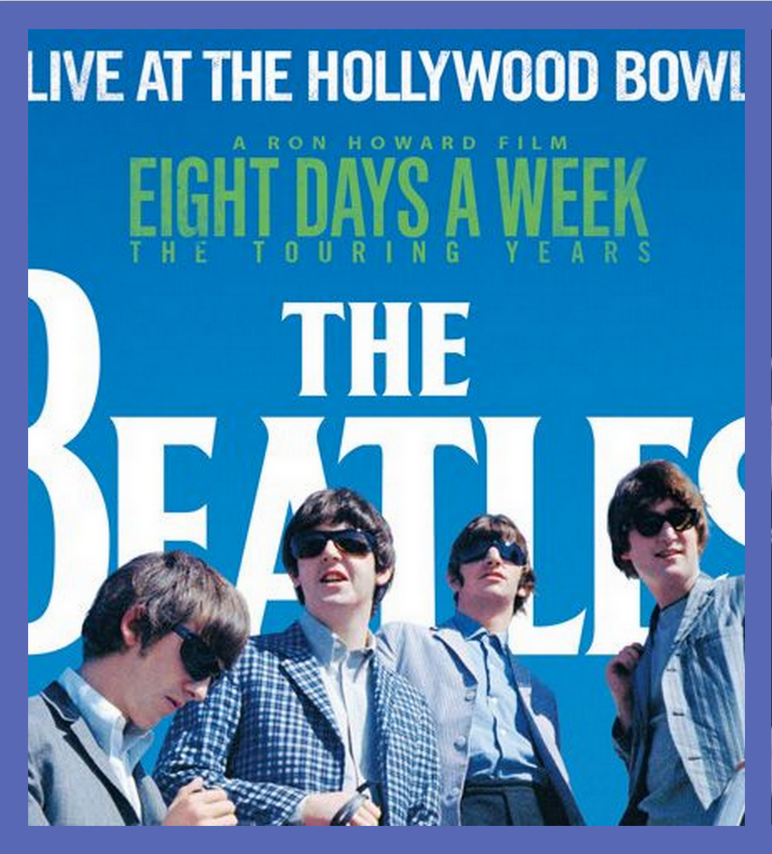
Long Lost Live Beatles Exhumed!


As Beatlemania swept the world, John, Paul, George and Ringo were at the vanguard of what is now known as the British Invasion. Following an incendiary appearance on The Ed Sullivan Show, on 9 February 1964, The Beatles stormed into American homes, kicking down the doors for their countrymen to follow.

Just five months later, on 23 August 1964, the group headlined at the prestigious Hollywood Bowl, in Los Angeles, California. Cementing their reputation as one the most exciting live bands in history, it was the first of three concerts the group would play at the venue, highlights of which were released on the 1977 album The Beatles At The Hollywood Bowl. “The chaos, I might almost say panic, that reigned at these concerts was unbelievable unless you were there,” recalled the late Sir George Martin in 1977. “The eternal shriek from 17,000 healthy, young lungs made even a jet plane inaudible.”

On 9 September, Live At The Hollywood Bowl will supersede its long out of print predecessor, with a 180g vinyl edition following on 18 November. With Giles Martin at the helm, and with the aid of Grammy-winning Abbey Road engineer Sam Okell, the original three-track tapes have been remixed and mastered at the iconic studios in which The Beatles recorded all of their albums.

 “Technology has moved on since my father worked on the material all those years ago,” Giles notes. “Now there’s improved clarity, and so the immediacy and visceral excitement can be heard like never before… What we hear now is the raw energy of four lads playing together to a crowd that loved them.” Featuring the 13 performances released on the original live album, with an additional four previously unreleased bonus tracks, Live At The Hollywood Bowl is the closest anyone can get to being at the Hollywood Bowl at the height of Beatlemania.

The album is a companion piece to the long-awaited documentary Eight Days A Week: The Touring Years. Directed by Oscar-winner Ron Howard, the film features a host of rare footage and focuses on the years 1962-66, during which time The Beatles travelled the globe, eliciting a frenzied reaction the likes of which the world had never seen before. Following a world premiere in London, on 15 September, the film will receive a global theatrical release.


The Beatles: Live At The Hollywood Bowl
Original 1977 album:
 
‘Twist And Shout’
‘She’s A Woman’
‘Dizzy Miss Lizzy’
‘Ticket To Ride’
‘Can’t Buy Me Love’
‘Things We Said Today’
‘Roll Over Beethoven’
‘Boys’
‘A Hard Day’s Night’
‘Help!’
‘All My Loving’
‘She Loves You’
‘Long Tall Sally’
 

Bonus tracks:
‘You Can’t Do That’
‘I Want To Hold Your Hand’
‘Everybody’ Trying To Be My Baby’
‘Baby’s In Black’


 Pre-order the album here.
With many thanks to UDiscover 

Picture credits: The Beatles Are Timeless
                                                                     

Related: 


Freda Kelly Recalls Her Days of Working With the Beatles - "Good Ol' Freda"
George Harrison - My Favourite Beatle - "My Sweet Lord" Live
New Beatles Band May Form With Sons
George Harrison and Ringo Starr - It Don't come Easy
For sale: Beatles recording that led to the biggest mistake in music history
Ravi Shankar and George Harrison - Two Music Legends
Was John Lennon Really a Genius?
Ringo Starr: Solo Beatle's lonely art club brand
Becoming The Beatles
Sir Paul McCartney Gaining Back Rights To His Music in 2018, 2019?
John Lennon Reveals Torture of Beatles 'Let It Be' Album In Tape-recorded Interview Now Up For Auction
The Beatles Visit To Australia 1964 - Powerhouse Museum Exhibition
John Lennon's Childhood Home To Be Auctioned - Update: Sold for £480,000
Tom Pinch: Time - Lapse Portraits of Paul McCartney and John Lennon
Beatles’ Royal Variety Performance: Fifty Years ago!
John Lennon Set To Stir Up US Stamp Collectors
8th August 1969: The Beatles Waiting To Cross Abbey Road
 ‘Man on the Run’: New Book About Paul McCartney After The Beatles
Arthur Alexander: The Forgotten Songwriter Who Inspired The Beatles, Bob Dylan And The Rolling Stones
George Harrison's Apple Years Box Set To Be Released
The Art of McCartney Project
Glyn Johns: Defining That Classic-Rock Sound
Fender Stratocaster: A Design Icon At 60 
The Traveling Wilburys: Their History
George Harrison and The Bee Gees To Receive Recording Academy Honors 
Sir Paul McCartney To Induct Ringo Starr Into Hall Of Fame
'American Pie' Lyrics Sell For $1.2 million In New York
Lost Beatles US Concert Movie Blocked From Release
 Beatles’ First Recording Contract to Be Auctioned For An Estimated $150,000 
The Three Lennon-McCartney Hits That Went to No. 1 Without Lennon or McCartney 
Cilla Black's Biography On TV
Bob Dylan Named Greatest Songwriter Ahead Of Lennon and McCartney According To Rolling Stone
John Lennon Born 75 Years Ago Today 
George Harrison's Catalogue Is Now Streaming   
John Lennon's Long-Lost Gibson J-160E Guitar Sells for Record $2.4 Million
Ringo Starr Reflects On His 35 Year Marriage
George Harrison: Tribute GeorgeFest Is Coming
John Lennon's Rock 'n' Roll Album - Update: Vale Sir George Martin
The Beatles Anthology: Streaming Now.
The Beatles 1 To Be Reissued With 50 Videos
George Harrison Makes Guest Appearance On Eric Clapton's New Album
Unseen Beatles Footage Released
Traveling Wilburys To Travel Into New Territory - Streaming
George Harrison - This is Love

Celebrating The Beatles' Revolver 50 Years On
Never Ever Give Up! - Famous Failure

The Beatles: Eight Days A Week - The Touring Years 
The Beatles 'Love' And Cirque du Soleil
Sgt. Pepper Lonely Hearts Club Band by The Beatles; It was 50 years ago today ... 
Celebrating George Harrison