Showing posts with label Design. Show all posts

November 16, 2016

A More Accurate World Map Wins Prestigious Japanese Design Award


To design a map of the world is no easy task. Because maps represent the spherical Earth in 2D form, they cannot help but be distorted, which is why Greenland and Antarctica usually look far more gigantic than they really are, while Africa appears vastly smaller than its true size. The AuthaGraph World Map tries to correct these issues, showing the world closer to how it actually is in all its spherical glory.

Created by Hajime Narukawa at Keio University's Graduate School of Media and Governance in Tokyo, the design just won the grand prize from Japan’s Good Design Award as Spoon & Tamago reports. It beat out over 1000 entries in a variety of categories. 

Unlike the Mercator projection, the 1569 mapping technique that you'd probably recognize from the world maps you saw in school, the continents on the AuthaGraph aren’t lined up straight across—they’re angled in a way that provides a more accurate representation of the distances between them. “AuthaGraph faithfully represents all oceans [and] continents, including the neglected Antarctica,” according to the Good Design Awards, and provides “an advanced precise perspective of our planet.” No longer does Africa look the same size as North America, or Antarctica look like one of the biggest continents (it’s smaller than everything but Europe and Australia).

The map—which is used in Japanese textbooks—can be fit into different shapes without losing its accuracy, and AuthaGraph sells paper assembly kits where you can fold it from a sphere to a cone to a flat map, mimicking the way the projection itself is made.

By Shaunacy Ferro
With many thanks to Mental Floss 
Get To Know a Map Projection: Azimuthal Orthographic

Napoleon Met His Waterloo Because He Used The Wrong Map!


October 23, 2016

The KARLBOX - Already A Waitlist For This $3,000 Set Of Colored Pencils


Displayed like a precious artifact under a clear acrylic case, a set of colored pencils in midtown Manhattan is proving irresistible to coloring aficionados and sketch artists.

At the Museum of Modern Art’s newly-renovated design store, the KARLBOX, as it’s called, contains 350 pieces of drawing paraphernalia: pencils, markers, charcoals, and watercolor brushes, all perfectly color-sorted. 
The black lacquered cabinet is stamped with the distinctive pony-tailed profile of its creator: Karl Lagerfeld, creative director of Chanel and Fendi. With a price tag of $3,000+ including sales tax, each pencil is worth roughly $12 (considering the various sharpeners included).
                                                             

MoMA tells Quartz that there’s already a wait list for the limited edition box set. For Lagerfeld-obsessed aesthetes, the price isn’t that hard to justify—the latest Chanel tweed jackets designed by the 83-year-old fashion designer retails for at least twice that.

Produced by 255-year-old German art supplies company Faber-Castell, the set pays homage to Lagerfeld’s love of drawing and illustration.
 “I wanted to become an illustrator, so I studied every book of costume from any kind of period and tried to make illustrations,” said Lagerfeld in a 2013 interview at the Lincoln Center. Aside from his fashion sketches, Lagerfeld also dabbled as a book illustrator for the 2014 Coco Chanel biography, The Allure of Chanel.


With many thanks to Quartz           


Inside The Rainbow Factory: Where Crayola Crayons Are Made 

Insanely Realistic Pencil Drawings

The Colouring-in Book Craze Explained

How Coloured Pencils Are Made
                                                         

June 18, 2016

The Making of a Steinway Grand Piano


It's easy to see why these pianos are expensive!

A Steinway grand piano consists of a staggering 12,116 parts. The fascinating process by which these pieces come together is the focus of Making Steinway, a new photography book from Christopher Payne.

As a former architect, Payne has a natural interest in component parts and form. He has explored the abandoned ruins on New York’s North Brother Island, and the world of American textile manufacturing. In Making Steinway, Payne turns his lens onto the New York Steinway & Sons piano factory, where 300 people work to create these extraordinary instruments.


Payne first visited the factory in 2002. It made a big impression—over the next nine years he thought about going back to photograph it. 

The shooting process, which took another five years, was significant not just for its scale, but for personal reasons as well. “After my father and grandmother passed away—both were pianists—my memories of the factory took on a more profound, spiritual importance,” says Payne. “I felt an obligation to return to take pictures of the instrument so deeply connected to my family.”

Payne’s intended approach was to work roughly in chronological order, documenting the piano assembly from start to finish. “I began with the shot that I had been thinking about for nine years, the view of the piano rims in the rim conditioning room,” he says. “The rims are lined up and you can walk through them like a tunnel. It’s incredible.” However, “often I would get distracted by something else in a different area. No matter how many times I visited the factory, I always saw something new and interesting.”


Making Steinway is not just about the multitude of unseen parts and minute details that together produce what Payne calls “one of the supreme acts of human invention and imagination”.

 It’s also about the talented craftspeople who have the ability to create these instruments. “The people who work at Steinway come from all over the world, and the factory is a microcosm of the diversity that makes New York City great,” he says. “Some workers are new to the factory, having recently immigrated to the US, while others have been there for decades. There’s not a lot of turnover, and everyone takes tremendous pride in their work.”
[....]


By Anika Burgess

With many thanks to Atlas Obscura


Related:
The Mayuri: A Very Decorative Musical Instrument

The Fender Stratocaster: A Design Icon At 60 

 Crystal-Covered Grand Piano On the Market for $620,000

The Weirdest Musical Instruments       

18th Century Mandolins Were a Symphony of Rare Ingredients 


The Banjo: A History by Laurent Dubois

 Wintergatan - Marble Machine


June 01, 2016

German WWII Coding Machine Found On eBay For $20


This is not the machine Alan Turing was working on.


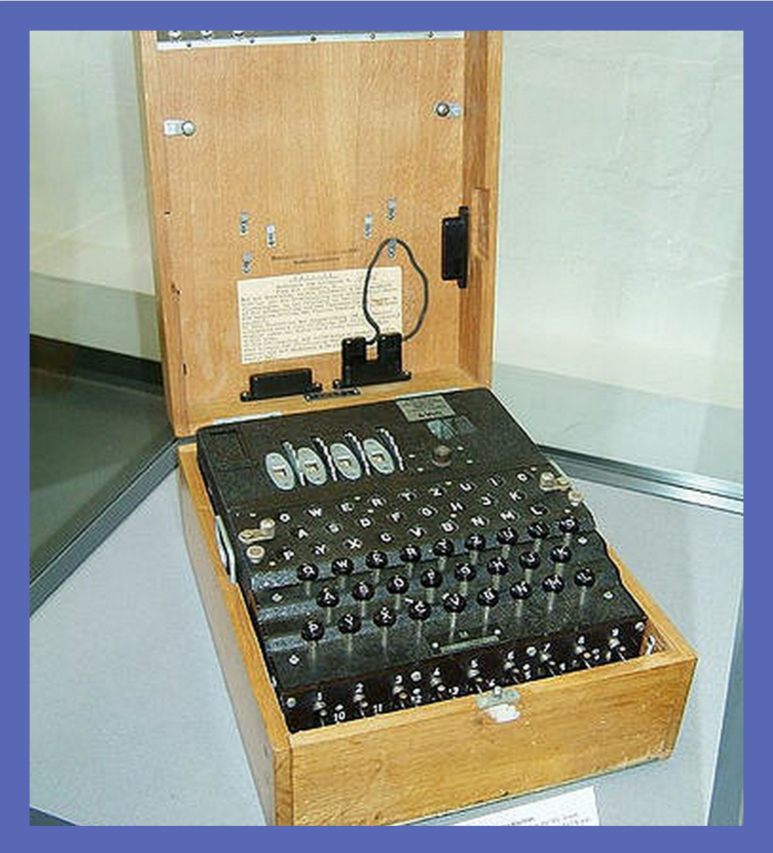
The Enigma machine is pictured below:


Part of a rare German coding machine used by Hitler and his generals to send secret messages during the Second World War has been found after it was advertised on eBay for (£9.50) $20.
A volunteer at the National Museum of Computing, at Bletchley Park, southern England, saw the Lorenz teleprinter, which was in its original case, online.

It was only after buying and refurbishing the teleprinter that it was found to be a military model, which had been used to enter orders or information to be turned into coded messages generated by a cipher machine, the Lorenz SZ42, which the Nazis used for communications between command posts.

The Lorenz cipher was larger and far more complex than the better known Enigma machine, which was portable and used by the Germans for battlefield and diplomatic communications.

A volunteer at the museum in Buckinghamshire, which is separate from the former code-breaking headquarters where the Enigma code was cracked, was looking on eBay when he saw a photograph of what looked like a teleprinter. He and a colleague contacted the owner and visited her in Southend, Essex, where the teleprinter was in its case on the floor of a shed, John Wetter, from the museum, told BBC Radio 4’s Broadcasting House. It was not clear how it came to be in the woman’s shed.

“We said, ‘Thank you very much, how much was it again?’ She said £9.50, so we said, ‘Here’s a £10 note. Keep the change.’”

Its acquisition, and the loan of a Lorenz cipher machine from a Norwegian collection, will allow the museum to display original hardware to show how the Germans encrypted commands. The borrowed cipher machine was used by the German command in Lillehammer, near Oslo.

About 200 Lorenz machines were to have been used during the Second World War but only four survived. The loaned cipher is missing its motor, which the museum is trying to trace.

The Lorenz code had been broken by Bill Tutte, a British mathematician, who deciphered it without ever having seen the machine, which had 12 wheels each with many settings. 

This allowed the allies to read secret messages circulated by the German high command. 

By 1944 a computer called Colossus was able to decipher its messages within hours, rather than weeks.


Picture credit and more at: Colossus: The Secrets Of Bletchley Park.

With many thanks to The Australian 


A History Of Mick Jagger On Film

Alan Turing and The Imitation Game

The researchers who detected Einstein’s gravitational waves just won a $3 million Breakthrough Prize

Temple Grandin: Her Extraordinary Life And Work           
           
Hedy Lamarr's 101st Birthday Celebrated by Google

 Mathematical Minds Stir A Beauty Within

Modern Technology and Albert Einstein: Are We There Yet?

Arthur Benjamin: The Magic of Fibonacci Numbers

Claude Shannon Jr: The Greatest Genius No One Has Heard Of

John von Neumann: This Hungarian-American Mathematician May Have Been Smarter Than Einstein 

Great Minds: Filippo Brunelleschi

Great Minds: Leonardo da Vinci

The Genius of Nicola Tesla

Hedy Lamarr - Beauty And Brains in Abundance

The New Turing Test:Brainy Machines Need An Updated IQ Test, Experts Say 

Alan Turing Manuscript Sells For $1 million 

 'Albert Einstein Font' Lets You Write Like Physics Genius

Do You See Albert Einstein Or Marilyn Monroe In This Photo? 

Albert Einstein: Inspiring Quotes on Nature and Life

Albert Einstein: 25 Quotes

High school student Ryan Chester wins $350,000 For Film Explaining Einstein's Theory Of Relativity

Warp Speed Space Travel A Possibility Thanks To Einstein's Theory Of Relativity

Einstein's Famous Theory Has Aged Well 

Jason Padgett: Brain Injury Turns Man Into Math Genius

 Mad Geniuses: 10 Odd Tales About Famous Scientists

Benjamin Franklin:11 Surprising Facts

 Last Piece of Einstein’s Theory Of Relativity In Line For Final ‘Proof’

10 Mathematical Equations That Changed The World

11 Female Inventors Who Helped Power The Information Age 


Temple Grandin On The Autistic Brain

Top Ten Things Women Invented

Albert Einstein: Photographic Evidence Reveals His First Prediction Of Gravitational Waves 

Never Ever Give Up! - Famous Failures 

Creators Of Modern Cryptography Win Turing Award

A Mathematician Has Built A Machine That Can Beat The Odds In Roulette


Quantum Enigma Machines Are Becoming A Reality

Albert Einstein's Legacy


Gottfried Wilhelm Leibniz: The Philosopher Who Helped Create the Information Age