
Little wonder they are so expensive!
The effort that goes in to finding them is extraordinary.
The largest gem-quality diamond ever found
in North America is on display at the Smithsonian for three months in
its rough, uncut state.
“It's a really unusual chance for people to see this rare diamond,” says Jeffrey Post,
curator of the National Gem and Mineral Collection at the Smithsonian's
National Museum of Natural History. “It isn't something that happens
very often. This may be the only chance in your life to see such a
thing.”
Diamonds tend to be highly concentrated
in small areas underground where ancient volcanic eruptions pushed
magma upward through tubes. The magma solidified into an igneous rock
called kimberlite. Scattered through the kimberlite left within the tube
are diamonds that were pushed upwards with the magma.
The 187.63 carat Foxfire diamond was almost discarded when it was unearthed in August 2015 at the Diavik diamond mine, above the Arctic Circle in Canada's Northwest Territories. The mine was not known for large diamonds like the Foxfire, but rather much smaller stones. The chances of a large diamond coming through the sorting system were believed to be so slim that all large stones were assumed to be kimberlite, thus filtered and crushed. The Foxfire diamond could have been crushed, but because of its somewhat elongated shape, it slipped through the sifting screen.
The name Foxfire pays homage to the aboriginal name for the aurora borealis, which Post says looks like "foxtails swishing away in the sky.”
In June 2016, Deepak Sheth of Amadena Investments, who trades in historic or unique stones, purchased the uncut diamond at auction (the exact price has not been publicly disclosed) and then did an unusual thing. He allowed the Smithsonian's scientists to borrow it.
“In some way, it's like diamonds are like meteorites from deep in the earth,” Post says.
Most diamonds appear to have been created between one and three billion years ago roughly a hundred miles beneath the surface of the Earth. Diamonds can help geologists understand Earth's history, says Post.
The 187.63 carat Foxfire diamond was almost discarded when it was unearthed in August 2015 at the Diavik diamond mine, above the Arctic Circle in Canada's Northwest Territories. The mine was not known for large diamonds like the Foxfire, but rather much smaller stones. The chances of a large diamond coming through the sorting system were believed to be so slim that all large stones were assumed to be kimberlite, thus filtered and crushed. The Foxfire diamond could have been crushed, but because of its somewhat elongated shape, it slipped through the sifting screen.
The name Foxfire pays homage to the aboriginal name for the aurora borealis, which Post says looks like "foxtails swishing away in the sky.”
In June 2016, Deepak Sheth of Amadena Investments, who trades in historic or unique stones, purchased the uncut diamond at auction (the exact price has not been publicly disclosed) and then did an unusual thing. He allowed the Smithsonian's scientists to borrow it.
“In some way, it's like diamonds are like meteorites from deep in the earth,” Post says.
Most diamonds appear to have been created between one and three billion years ago roughly a hundred miles beneath the surface of the Earth. Diamonds can help geologists understand Earth's history, says Post.
During past volcanic eruptions,
“diamonds were brought to the surface, giving us a glimpse into a part
of the Earth we can't otherwise study,” Post says.
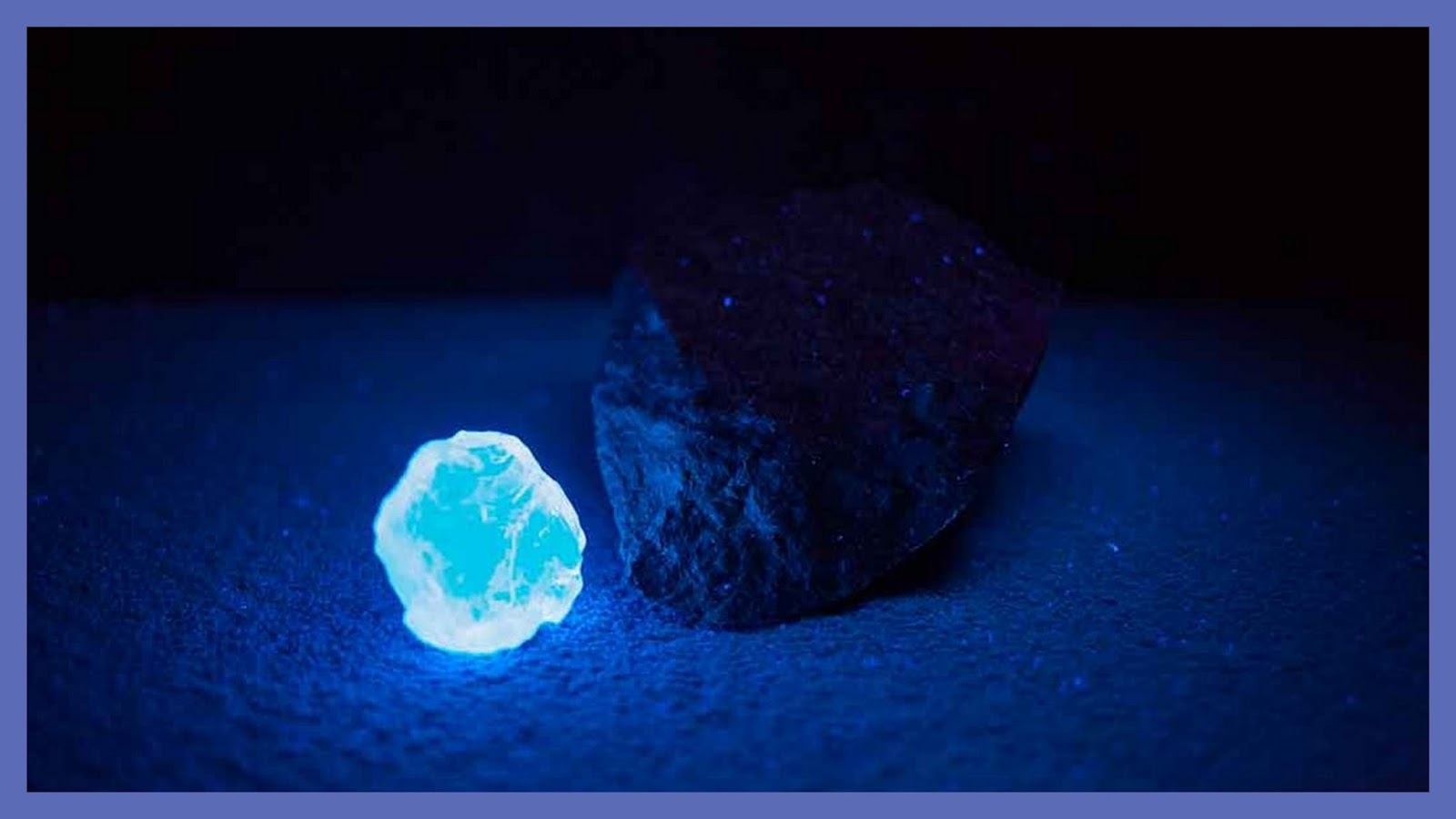
In order to find out more about the Foxfire diamond's composition, Post exposed the uncut gemstone to different types of light and used a spectrograph to see how the various elements in the diamond were reflecting the light. A funny thing was discovered along the way.
“One of the interesting properties of this diamond is that if you go in a dark room and turn on a black light, it glows bright blue. It lights up the room,” Post says. “There are a number of diamonds that do this, but this does so quite a lot. This happens through trace amounts of nitrogen. By doing spectral analysis of that light, we can tell how much nitrogen might be there.”
It gets weirder.
“What is unusual, is that when you turn the light off [the diamond] continues to glow.

First a deep orange color and then it fades to a creamy white glow. So that phosphorescence can tell us something about how that diamond was formed. . . . It gives us this interesting insight into its history that we wouldn't get just by looking at it.”
Larger diamonds have been found elsewhere in the world. South Africa's enormous Cullinan diamond weighed 3,106.75 carats before it was cut into numerous stones. But diamonds from North America are particularly valued because of their relatively clean provenance. Unlike many African diamonds, the stones that come from Canada's mines are not associated with conflicts or wars. Environmental protection standards are high. The microscopic maple leaves and polar bears etched into each diamond helps ensure that buyers know what they are getting.
This geology allows diamond mines to be relatively compact mining operations that can be restored to a healthy wild condition after mining operations are completed. The Canadian government requires that plans for restoration be made before mining even begins.
“With a diamond mine, it's not like oil where you have to pump it some place,” Post says. “You've got one hole in the ground that is a very well defined area, but the area around it can be pretty well returned [as habitat for wildlife]. This one mine, they are literally mining through a lake. In the end, this thing might very well fill up with water again and just be a deeper lake.”
With the passage of time, the Diavik mine will eventually become that deeper lake and for a brief period, the Foxfire diamond is available for anyone who wants to see it.
“It's a one time opportunity,” Post says.
The Foxfire diamond will be on view in the Harry Winston Gallery next to the Smithsonian's famous Hope Diamond at the National Museum of Natural History through February 16, 2017.
By Jackson Landers
In order to find out more about the Foxfire diamond's composition, Post exposed the uncut gemstone to different types of light and used a spectrograph to see how the various elements in the diamond were reflecting the light. A funny thing was discovered along the way.
“One of the interesting properties of this diamond is that if you go in a dark room and turn on a black light, it glows bright blue. It lights up the room,” Post says. “There are a number of diamonds that do this, but this does so quite a lot. This happens through trace amounts of nitrogen. By doing spectral analysis of that light, we can tell how much nitrogen might be there.”
It gets weirder.
“What is unusual, is that when you turn the light off [the diamond] continues to glow.
First a deep orange color and then it fades to a creamy white glow. So that phosphorescence can tell us something about how that diamond was formed. . . . It gives us this interesting insight into its history that we wouldn't get just by looking at it.”
Larger diamonds have been found elsewhere in the world. South Africa's enormous Cullinan diamond weighed 3,106.75 carats before it was cut into numerous stones. But diamonds from North America are particularly valued because of their relatively clean provenance. Unlike many African diamonds, the stones that come from Canada's mines are not associated with conflicts or wars. Environmental protection standards are high. The microscopic maple leaves and polar bears etched into each diamond helps ensure that buyers know what they are getting.
This geology allows diamond mines to be relatively compact mining operations that can be restored to a healthy wild condition after mining operations are completed. The Canadian government requires that plans for restoration be made before mining even begins.
“With a diamond mine, it's not like oil where you have to pump it some place,” Post says. “You've got one hole in the ground that is a very well defined area, but the area around it can be pretty well returned [as habitat for wildlife]. This one mine, they are literally mining through a lake. In the end, this thing might very well fill up with water again and just be a deeper lake.”
With the passage of time, the Diavik mine will eventually become that deeper lake and for a brief period, the Foxfire diamond is available for anyone who wants to see it.
“It's a one time opportunity,” Post says.
The Foxfire diamond will be on view in the Harry Winston Gallery next to the Smithsonian's famous Hope Diamond at the National Museum of Natural History through February 16, 2017.
By Jackson Landers
With many thanks to The Smithsonian
Ome other posts on diamonds:
The Rare ‘Blue Moon’ Diamond Is All Set To Become The Most Expensive Jewel, When It Goes Up On Sale
‘Fascination’: Graff’s $40 Million Diamond Transformable Watch
The World’s Priceless Treasures
Replica Of Louis XIV's Versailles Is The World’s Most Expensive Home - $416 million
The Most Expensive Substances In The World
Some Of The Rarest Jewels In The World
The Most Expensive Things in the World
Argyle Violet Diamond Expected To Fetch Up To $4m At Auction
Ancient Gemstone Lapis Back In Fashion
The “Oppenheimer Blue" Diamond Sells For $57.6 million at Christie's
Cartier Exhibition Features Pieces Once Owned By Elizabeth Taylor and Grace Kelly
The Rare ‘Blue Moon’ Diamond Is All Set To Become The Most Expensive Jewel, When It Goes Up On Sale
Replica Of Louis XIV's Versailles Is The World’s Most Expensive Home - $416 million
Argyle Violet Diamond Expected To Fetch Up To $4m At Auction
The Lesedi la Rona Diamond Could Fetch $US70m
Ancient Gemstone Lapis Back In Fashion
The “Oppenheimer Blue" Diamond Sells For $57.6 million at Christie's
Hermès Birkin Bag Sells For $US298,000
Padmanabhaswamy Temple Treasure: Worth $22 Billion
The Bahia Emerald - The 400 Million Dollar Rock
25 Things You Didn't Know About Jewelry
The Royal Jewels
The Virgin Rainbow: World's Most Beautiful Opal
Elizabeth Taylor's famous pearl sells for $11.84m at NYC auction
Some Of The Rarest Jewels In The World
Pakistan Claims Koh-i-Noor Diamond
Top Ten Lost Treasures of the World
Petra Diamond Miners in South Africa Unearth a ‘Magnificent’ and ‘Exceptional’ Discovery At Cullinan
Elizabeth
Taylor's Bulgari Jewellery Goes On Show In Melbourne
Dream Eco-Home Of Russian Hemp Tycoon Will Be Noosa’s Priciest Abode
The Rare ‘Blue Moon’ Diamond Is All Set To Become The Most Expensive Jewel, When It Goes Up On Sale
‘Fascination’: Graff’s $40 Million Diamond Transformable Watch
The World’s Priceless Treasures
Replica Of Louis XIV's Versailles Is The World’s Most Expensive Home - $416 million
The Most Expensive Substances In The World
Some Of The Rarest Jewels In The World
The Most Expensive Things in the World
Argyle Violet Diamond Expected To Fetch Up To $4m At Auction
Ancient Gemstone Lapis Back In Fashion
The “Oppenheimer Blue" Diamond Sells For $57.6 million at Christie's
Cartier Exhibition Features Pieces Once Owned By Elizabeth Taylor and Grace Kelly
The Rare ‘Blue Moon’ Diamond Is All Set To Become The Most Expensive Jewel, When It Goes Up On Sale
Replica Of Louis XIV's Versailles Is The World’s Most Expensive Home - $416 million
Argyle Violet Diamond Expected To Fetch Up To $4m At Auction
The Lesedi la Rona Diamond Could Fetch $US70m
Ancient Gemstone Lapis Back In Fashion
The “Oppenheimer Blue" Diamond Sells For $57.6 million at Christie's
Hermès Birkin Bag Sells For $US298,000
Padmanabhaswamy Temple Treasure: Worth $22 Billion
The Bahia Emerald - The 400 Million Dollar Rock
25 Things You Didn't Know About Jewelry
The Royal Jewels
The Virgin Rainbow: World's Most Beautiful Opal
Elizabeth Taylor's famous pearl sells for $11.84m at NYC auction
Some Of The Rarest Jewels In The World
Pakistan Claims Koh-i-Noor Diamond
Top Ten Lost Treasures of the World
Petra Diamond Miners in South Africa Unearth a ‘Magnificent’ and ‘Exceptional’ Discovery At Cullinan
Dream Eco-Home Of Russian Hemp Tycoon Will Be Noosa’s Priciest Abode


