Accessing Universal Intelligence.
Human Ingenuity and Creativity. Our Cultural Heritage.
Favourite things. Music and Movies. Nature. Items that interest me on any topic.
It is with much sadness that we must let you know that the author of this blog, Rosie, passed away a few days ago, 3 months after being diagnosed with an inoperable brain tumour.
Rosie bravely underwent the recommended chemotherapy and radiation treatment, as well as some adjunct alternative therapies, alas this type of tumour is rarely survived.
Rosie was a beloved wife, mother, and grandmother, and will be lovingly remembered by many friends and relatives.
We thank you for your readership, it has meant a great deal to Rosie - she loved doing this blog - and hope we can continue this blog in a special way, in Rosie's memory.
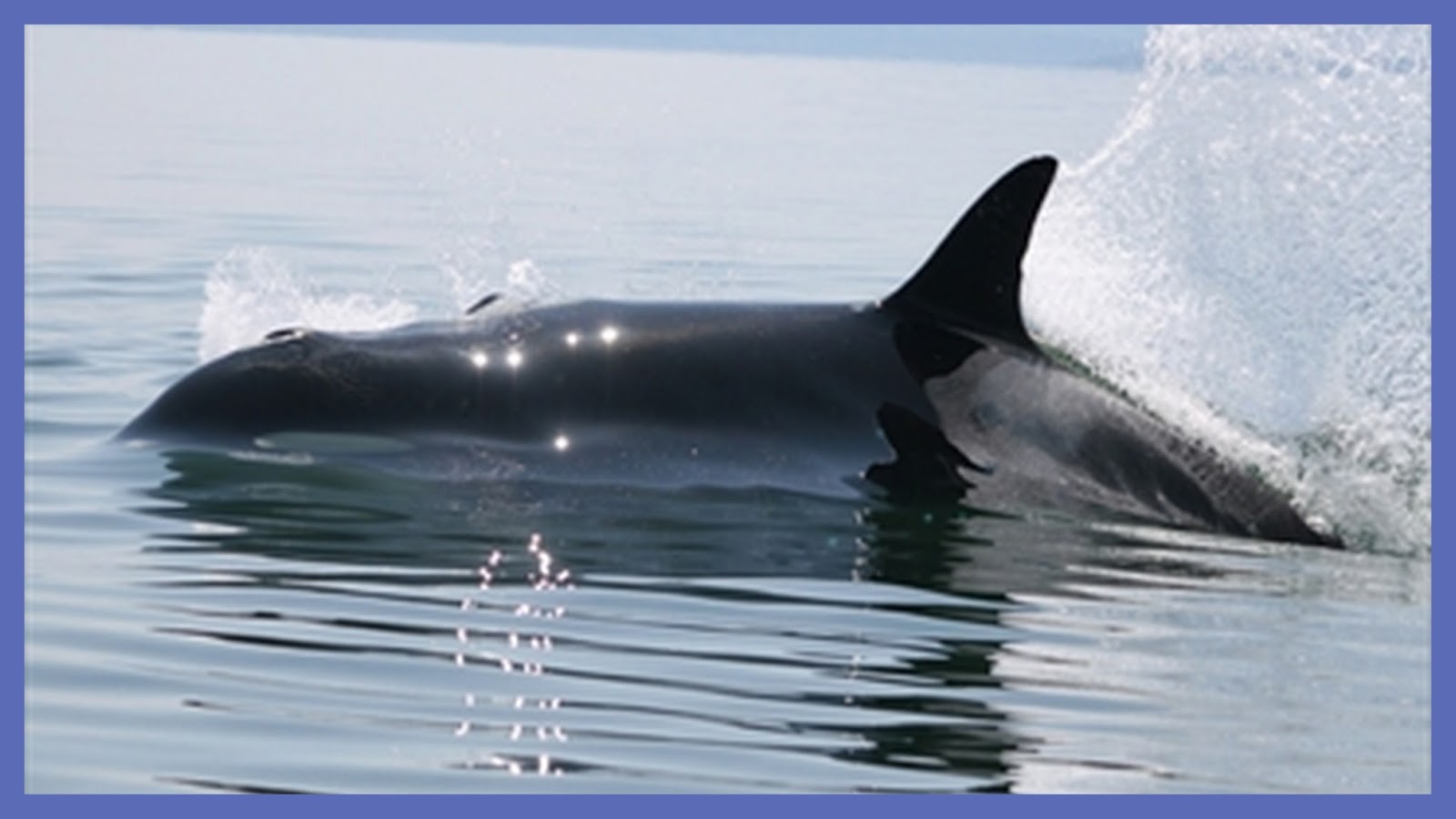
VANCOUVER — The death of a whale considered
the oldest in the West Coast's southern resident population could
particularly affect one animal who may have lost yet another adoptive
mother, a wildlife biologist says.
Brad Hanson of the Seattle-based Northwest
Fisheries Science Center said an orca dubbed J2 and also known as Granny
has not been spotted since mid-October and is believed to have died.
He said that while some estimates put
Granny's age at over 100, researchers determined through a biopsy sample
nearly two years ago that she was between her mid-60s and early 80s.
She was considered a matriarch of the J-pod,
which is one of three family groups of southern resident killer whales.
J-pod now has about 24 members, including L87, who joined the clan about two years ago, Hanson said.
"L87 is actually an L-pod member but he lost
his mom a number of years ago and he gravitated over to K-pod and hung
out with an older female there until she passed," Hanson said Tuesday
from Seattle. "Ironically, he went to J-pod so it'll be interesting to
see what L87 does now because these adult males are used to staying with
their mother their entire life."
Hanson said male whales sometimes die soon
after their mother's death and that females tend to outlive them by up
to three decades.
The movement of the entire J-pod will be of
interest to scientists because Granny was seen as leading the group
since the 1970s, he said.
"These animals are so long-lived relative to
a lot of other wildlife populations that it's an unprecedented
situation. And I expect that we may learn some new things about how
killer whale societies adjust to these changes."
At least two other females in the J-pod,
including J16 and J19, were also born in the 1970s and could take on the
matriarch role, Hanson said, adding J14 died last summer and that the
number of older female whales is dwindling.
"We believe these older females are the
keepers of corporate knowledge, if you will, so where (the pod) goes and
when they go there, somebody has to make that initial decision."
Hanson said the J-pod spends most of its
time in the northern Strait of Georgia or the western part of the Strait
of Juan de Fuca and don't trek very far south to the Washington coast,
unlike the K and L pods, which also venture as far as California.
The Center for Whale Research in Washington
state said in a statement on its website that it does not know what
killed Granny and that she was the eldest within the three family pods
of endangered southern resident whales.
The centre said the total number of southern resident whales has fallen to 78.
The loss of Granny comes less than a month
after J34, an 18-year-old male member of J-pod, was found washed up on a
Sechelt beach after apparently being hit by something, and the October
death of J28, a female with a one-year-old calf.
Southern resident killer whales, which
almost exclusively eat salmon, were listed as endangered in 2005.
Sadly not unique. A very talented singer who unfortunately was but one of the few who had to struggle like this.
The postwar country music scene was a frontier land of drunks, swindlers and scammers.
There
were thousands of venues and as many bands and singers entertaining
Americans before televisions flickered in every home. These were mostly
poor people, and the entertainers and their audiences would travel hundreds of kilometres for a show.
The
performers were a tight- knit community working in a brutal trade of
gruelling tours and thieving promoters. It was a cash business and they
were sometimes robbed. It was common for performers to carry a gun —
like Buddy Holly, whose .22 pistol was found near his plane’s crash
site. The Holly crash also claimed the Big Bopper and Ritchie Valens.
Driving
to gigs could be equally perilous: country singers Johnny Horton and
Betty Jack Davis were both killed travelling between shows.
This
was the world over which Patsy Cline briefly ruled with a short run of
beautifully produced country crossover hits driven by her pure contralto. Pioneering a movement later dubbed “countrypolitan”, Cline led a revival of sorts as more traditional music was sidelined by the rock ’n’ roll phenomenon.
Virginia
Patterson Hensley was named after the state in which she was born in
1932. Her parents were working poor and after her father left home she
dropped out of school for a series of menial jobs before asking the
local disc jockey if she could sing on his show. It went well and the
soon-to-be-renamed Patsy started performing around the state and coming
to the attention of rising country star Jimmy Dean. About the same time
she married Gerald Cline.
Like
many stars of the era, and lacking confidence, Patsy Cline signed a
hopelessly restrictive contract and found she could record only material
also published by her record company. After a series of honky-tonk
duds, she chanced on a Kay Starr reject — Walkin’ After Midnight. It took off, reaching No 12 in January 1957 on what by the end of the year would be renamed Billboard’s Hot 100.
But
it was a false dawn, and Cline remained shackled by her contract until
1960. Signing with Decca, she quickly relaunched her career with the
glorious ballad I Fall to Pieces, one of the most distinctive hits of the era. It went to No 1 on the country charts and glanced Billboard’s top 10.
But as I Fall to Pieces made
its way to the top, Cline did just that: on June 14, 1960 she was
almost killed in a head-on car crash in Nashville. Cline was in hospital
for a month and shaken by the near-death experience that left scarring
on her forehead but, on crutches, she returned to touring almost
immediately.
She soon scored another hit with one of Willie Nelson’s first compositions, Crazy, and
became the first female country star to headline her own shows. She had
a full book of them when, on January 25, 1963, disc jockey Cactus Jack
Call, an old friend, was killed in a Missouri car crash, setting off an
extraordinary series of events.
On
March 2, Cline played a concert with Tex Ritter and Jerry Lee Lewis. She
and others on the bill agreed to perform at a fundraiser in Kansas City
the following day to help out Call’s widow. Cline gave three
performances, finally appearing in a white chiffon gown and singing I Fall to Pieces.
With
the airport fogged in, they stayed the night, but her manager and
pilot, the recently licensed Randy Hughes, who had less than 50 hours’
flying experience, decided to take off into the poor weather the next
day. “Don’t worry about me,” Cline told her friend Dottie West, who was
driving back. “When it’s my time to go, it’s my time.”
Unable
to read the instruments in the heavy weather, Hughes lost control and
the plane went down outside Camden, Tennessee. Cline and Hughes were
killed alongside Cowboy Copas and Hawkshaw Hawkins.
One
of the first on the scene the next morning was singer Roger Miller, a
friend of all on board. He found the Piper Cherokee crashed nose down
and everyone dead. “Oh my god, there they were. It was ghastly,” he said
years later.
After the bodies were
removed, local looters stole personal effects from the scattered
wreckage, including the chiffon dress and Cline’s concert payment.
Cline was 30 and left a son and daughter by her second marriage, to Charles Dick, who died last year aged 81.
Not
long after setting out from his home in Tennessee to attend Cline’s
funeral, her old friend and label mate from those days on the road,
singer-guitarist Jack Anglin, rounded a bend at high speed, lost control
of his car and was killed instantly.
Sabrina, a Sumatran/Bengal tiger,
was born in 1998. She was clinging to life when authorities found her
and two other tigers in the backyard of a rural Texas home. Sabrina and
her two sons were left to fend for themselves after their owner passed
away. It was ten days before anyone knew the owner had passed or that
three tigers were baking in the Texas heat with no food and little
water. Sabrina had somehow escaped her enclosure and authorities had to
sedate her to get her into a travel trailer.
See photos from Sabrina’s rescue here. Unfortunately, her story doesn’t end there. Sabrina was then left in
the trailer for over a week before being brought to Pride Rock Wildlife
Refuge in Texas. Here Sabrina got some much needed food and water as
she was severely dehydrated and very malnourished. After hearing
Sabrina’s triumphant story of survival, we knew we had a place for her
here at the Sanctuary.
Sabrina arrived in the spring of 2010 very frightened and confused.
She had lost the only home she knew and was very nervous around new
people. After months of working with Sabrina, she finally came out of
her shell. It was a group effort to rescue Sabrina and her two sons and
we thank Pride Rock Wildlife Refuge for their immediate help in the rescue, Peace River Refuge who provided a home for Sabrina’s sons and donors who provided support so we could help Sabrina.
Today, Sabrina is a totally different cat than when she first
arrived. She chuffs to her tiger neighbors and can sleep peacefully
even when strangers are around. She enjoys getting new enrichment and
likes to shred any boxes. She really likes snowmen and even made a huge
snowball herself after rolling one of the segments around her habitat.
In the summer, she soaks in her pool and takes long naps on her perch.
Her amazing transformation inspires us all and reminds us that we can
make a difference.
You can help provide daily care for Sabrina by becoming her sponsor.