Accessing Universal Intelligence.
Human Ingenuity and Creativity. Our Cultural Heritage.
Favourite things. Music and Movies. Nature. Items that interest me on any topic.
With only two months remaining in 2016, Dolly Parton adds another
monumental milestone to her already impressive year. She received the
Willie Nelson Lifetime Achievement Award at the 50th Annual CMA Awards
show on Wednesday, Nov. 2, 2016. Dolly’s “9 to 5″ co-star, Lilly Tomlin,
presented the award calling her “one of the greatest artists in the
history of country music.
The CMA tribute began with Jennifer Nettles and Pentatonix performing
Dolly’s “Jolene.”
Reba followed with her version of “9 to 5″ and Kacey
Musgraves stepped in with “Here You Come Again.”
Newly crowned Female
Vocalist of the Year Carrie Underwood and Martina McBride joined the
others to sing Dolly’s signature hit “I Will Always Love You.” In her
acceptance speech, Dolly thanked a host of special people in her life
and jokingly said,
“For me to be receiving the Willie Nelson award, this is a real ‘high.'”
The 50th Annual CMA Awards Show celebrated the year’s most
accomplished artists and reflected on five decades of country music.
Dolly’s song “I Will Always Love You” is one of three country hits
featured in the mash-up single and epic music video “Forever Country”
which celebrates the awards’ golden anniversary. “I Will Always Love
You” is blended with Willie Nelson’s “On the Road Again” and the late
John Denver’s “Take Me Home, Country Roads.”
The Willie Nelson Lifetime Achievement Award is, according to the
Academy, bestowed on “an iconic artist who has attained the highest
degree of recognition in Country Music… an artist who has achieved both
national and international prominence and stature through concert
performances, humanitarian efforts, philanthropy, record sales, and
public representation at the highest level.”
The 50th Annual CMA Awards Show was hosted by Brad Paisley and Carrie
Underwood and broadcast live from the Bridgestone Arena in Nashville,
TN.
Etched with strange pictograms, lines and wedge-shaped markings, they
lay buried in the dusty desert earth of Iraq for thousands of years.
The clay tablets left by the ancient Sumerians around 5,000 years ago
provide what are thought to be the earliest written record of a long
dead people.
Although it took decades for archaeologists to
decipher the mysterious language preserved on the slabs, they have
provided glimpses of what life was like at the dawn of civilisation.
Similar
tablets and carved stones have been unearthed at the sites of other
mighty cultures that have long since vanished – from the hieroglyphics
of the Ancient Egyptians to the inscriptions of the Maya of Mesoamerica.
The stories and details they contain have stood the test of time,
surviving through the millennia to be unearthed and deciphered by modern
historians. But there are fears that future archaeologists may not
benefit from the same sort of immutable record when they come to search
for evidence of our own civilisation. We live in a digital world where
information is stored as lists of tiny electronic ones and zeros that
can be edited or even wiped clean by a few accidental strokes on a
keyboard. “Unfortunately we live in an age that will leave hardly any
written traces,” explained Martin Kunze.
Kunze’s solution is the Memory of Mankind
project, a collaboration between academics, universities, newspapers
and libraries to create a modern version of those first ancient Sumerian
tablets discovered in the desert.
Their plan is to gather together the
accumulated knowledge of our time and store it underground in the
caverns carved out in one of the oldest salt mines in the world, in the
mountains of Austria’s picturesque Salzkammergut. “The main point of
what we are doing is to store information in a way that it is readable
in the future. It is a backup of our knowledge, our history and our
stories,” says Kunze.
Creating a stone “time capsule” may seem archaic in the age where
most of our knowledge now floats around the internet cloud, but a slide
back into the technological dark ages is not beyond comprehension. The
advent of the internet has seen people have more information at their
fingertips than at any previous point in human history. Yet the huge
repositories of knowledge we have built up are perilously vulnerable.
Ever
more information is being stored digitally on remote computer servers
and hard disks. How many of us have hard copies of the photographs we
took on our last holiday, for example.
The situation gets more
serious when we consider scientific papers that are now solely published
online. Entire catalogues of video footage from news broadcasters,
television and film are stored digitally. Official documents and
government papers reside in digital libraries.
Yet a conference of
space weather scientists, together with officials from Nasa and the US
Government, earlier this year warned of the fragile nature of all this
digital information. Charged particles thrown out by the sun in a
powerful solar storm could trigger electromagnetic surges that could render our electronic devices useless and wipe data stored in memory drives.
The last major coronal mass ejection to hit the Earth, known as the Carrington event,
was in 1859 and is thought to have been the biggest in 500 years. It
blew telegraph systems all over the world and pylons threw sparks. In
the age of the internet, such an event would be catastrophic.
But
there are other threats too – malicious hackers or even careless
officials could tamper with these digital records or delete them
altogether. And what if we simply lose the ability to read this
information? Technology is changing so fast that media formats are
quickly rendered obsolete. Minidiscs, VHS and the humble floppy disk
have become outdated within decades.
Few computers even come with DVD drives now, while giving the current
generation of teenagers a floppy disk would leave them flummoxed. If
information is stored on one of these formats and the technology needed
to access it disappears completely, then it could be lost forever.
Hence the desire to keep a hard copy of our most important documents.
Unfortunately, even the more traditional forms of storing information
are also unlikely to keep information safe for more than a few
centuries. While we have some paper manuscripts that have survived for
hundreds of years – and in the case of papyrus scrolls, for thousands –
unless they are stored in the right conditions, most disintegrate to
dust after a couple of hundred years. Newspaper can decompose within six
weeks if it gets wet.
“It is very likely that in the long term
the only traces of our present activities will be global warming,
nuclear waste and Red Bull cans,” says Kunze. “The amount of data is
inflating rapidly, so the real challenge becomes selecting what we want
to keep for our grandchildren and those that come after them.”
Which
is why Kunze and his colleagues are instead looking further back in
time for inspiration, to those Sumerian stone tablets. The Memory of
Mankind team hopes to create an indelible record of our way of life by
imprinting official documents, details about our culture, scientific
papers, biographies, popular novels, news stories and even images onto
square ceramic plates measuring eight inches (20cm) across.
This
hinges on a special process that Kunze describes as “ceramic microfilm”,
which he says is the most durable data storage system in the world. The
flat ceramic plates are covered with a dark coating and a high energy
laser is then used to write into them.
Each of these tablets can
hold up to five million characters – about the same as a
four-hundred-page book. They are acid- and alkali-resistant and can
withstand temperatures of 1300C. A second type of tablet can carry
colour pictures and diagrams along with 50,000 characters before being
sealed with a transparent glaze.
The plates are then stacked inside ceramic boxes and tucked into the dark caverns of a salt mine in Hallstatt,
Austria. As a resting place for what could be described as the ultimate
time capsule, it is impressive. In the right light the walls still
glisten with the remnants of salt, which extracts moisture and
desiccates the air.
The salt itself has a Plasticine-like property that helps to seal
fractures and cracks, keeping the tomb watertight. Buried beneath
millions of tonnes of rock, the records will be able to survive for
millennia and perhaps even entire ice ages, Kunze believes.
In
some distant future after our own civilisation has vanished, they could
prove invaluable to any who find them. They could help resurrect
forgotten knowledge for cultures less advanced than our own, or provide a
wealth of historical information for more advanced civilisations to
ensure our own achievements, and our mistakes, can be learned from. But it could also have value in the shorter term too.
“We
are trying to create something that will not only be a collection of
information for a distant future, but it will also be a gift for our
grandchildren,” says Kunze. “Memory of Mankind can serve as a backup of
knowledge in case of an event like war, a pandemic or a meteorite that
throws us back centuries within two or three generations. A society can
lose skills and knowledge very quickly – in the 6th Century, Europe
largely lost the ability to read and write within three generations.”
Already the Memory of Mankind archive contains an eclectic glimpse of
our society. Among the information etched into the ceramic plates are
books summarising the history of individual countries around the world.
Towns and villages have also opted to include their own local histories.
A thousand of the world’s most important books – chosen by combining
published lists using an algorithm developed by the University of Vienna
– will be cut into the coating on the ceramic plates.
Museums are
including images of precious objects in their collections along with
descriptions of what we have learned about them. The Krumau Madonna – a
sculpture dating to the late 14th Century currently sitting in the
Museum of Art History in Vienna – is already there, along with paintings
by the Baroque artists Peter Paul Rubens and Anthony van Dyck.
There
are plates featuring pictures of fossils – dinosaurs, prehistoric fish
and extinct ammonites – alongside a description of what we know about
them. Even our current understanding of our own origins are included,
with pictures of one of the earliest examples of sculpture ever found –
the Venus of Willendorf.
Much of the material included on the tablets is in German, but there are tablets in English, French and other languages.
A
handful of celebrities have also found themselves immortalised in the
salt-lined vaults. Baywatch star and singer David Hasselhoff has a
particularly lengthy entry as does German singer Nena who had a hit with
99 Red Balloons in the 1980s. Nestled among them is a plate detailing
the story of Edward Snowden and his leak of classified material from the
US National Security Agency.
The University of Vienna has been
placing prize winning PhD dissertations and scientific papers onto the
tablets. Included in the archive are plates describing genetic
modification and bioengineering patents, explaining what today’s
scientists have achieved and how they managed it.
And alongside
research, everyday objects like washing machines, smartphones and
televisions are also being documented as a record of what life is like
today.
The plates also serve as a warning for future generations –
with sites of nuclear waste dumps pinpointed so future generations
might know to avoid them or to clean them up if they have the
technology. Newspapers have been asked to send their daily editorials to
provide a repository of opinions as well as facts.
In many ways,
the real problem is what not to include. “We probably have about 0.1% of
the antique literature yet in the modern world publishing is as easy as
posting something on the internet or sending a tweet,” explains Kunze.
“Publications about science, space flight and medicine – the things we
really spend money on – drown in the mass of data we produce. The Large
Hadron Collider produces something like 30 Petabytes of data a year, but
this is equal to just 0.003% of annual internet traffic. “A random
fragment of 0.1% of our present day data will result in a very distorted
view of our time.”
To tackle this, Kunze and his colleagues are organising a conference
in November next year to bring scientists, historians, archaeologists,
linguists and philosophers together to create a blueprint for selecting
content for the project. The team also hope to immortalise glimpses of
mundane, everyday life as members of the public are encouraged to create
tablets of their own. “We are saving cooking recipes and stories of
love and personal events,” adds Kunze. “On one plate, a little girl has
included three photographs of her confirmation and written a short bit
of text about it. They give a glimpse of everyday life that will be very
valuable.”
Preserved tweets Memory of
Mankind is not the only project to face the daunting task of preserving
humanity’s accumulated knowledge. Librarians around the world are also
looking at the knotty problem of how to save the information from the
modern age.
The University of California Los Angeles, for
instance, is archiving tweets related to major events and preserving
them in their own archives. “We are collecting tweets from Cairo on the
day of the January 25th revolution for example,” explained Todd
Grappone, associate university librarian. “We are then translating them
into multiple languages and saving them in file formats that are likely
to be robust for the future. We are only doing it digitally at the
moment as we have something like 1,000 cellphone videos from that event
alone, but the value of that is enormous.”
Another project, called the Human Document Project,
is aiming to record information on wafers of tungsten/silicon nitride.
Initially they have been etching them with dozens of tiny QR codes – a
type of two-dimensional barcode – which can be read using smartphones,
but they say the final disks will hold information written in a form
that can be read using a microscope.
Leon Abelmann, a researcher at Twente University in Enschede, the
Netherlands, is one of the driving forces behind the project. He says
that they are hoping to produce something that will be able to survive
for one million years and are now starting to collaborate with the
Memory of Mankind. “We would be really happy if we found information
left for us by an intelligence that has already been extinct for a
million years,” he said. “So we think future intelligent beings will be
too. The mere fact that we need to take a helicopter view of ourselves
will hopefully make us realise that the differences between us are
trivial.”
Buried under a mountain, it may seem unlikely that any
future generations would be able to find these tablets. For this reason,
Memory of Mankind will has engraved some small tokens with a map
pinpointing the archives’ location, which they will then bury at
strategic places around the world. Other tokens are being entrusted to
50 holders who will pass them onto the next generation.
To ensure
those who do find it can actually read what is in there, the Memory of
Mankind team has been creating their own Rosetta Stone – thousands of
images labelled with their names and meanings.
All of which gives a
hint at the ambition of what they are trying to do. The individuals who
unearth this gold-mine of knowledge could be very different from our
own. In a few thousand years civilisation may have advanced beyond our
reckoning or descended back to the dark ages. Perhaps it will not even
be humans who end up uncovering our memories. “We could be looking at
some other form of intelligent life,” adds Kunze.
We will never
know what those future archaeologists will make of our civilisation when
they wipe the dust away from the tablets in thousands of years’ time,
but we can hope that like the ancient Sumarians, we will not be
forgotten.
John Lennon said "If you tried to give rock and roll another name,
you might call it 'Chuck Berry.'" The man whose name is synonymous with
rock and roll just turned 90, and he announced today that he will be
releasing his first album in 38 years. The album, entitled Chuck, will be released in 2017 on Dualtone Records
In addition to being the first person inducted into the Rock and
Roll Hall of Fame, Berry was also honored by NASA when his song "Johnny
B. Goode" was included on the Golden Record that placed aboard the Voyager 1 and 2 spacecraft in 1977.
Here's Berry and Lennon performing "Johnny B. Goode":
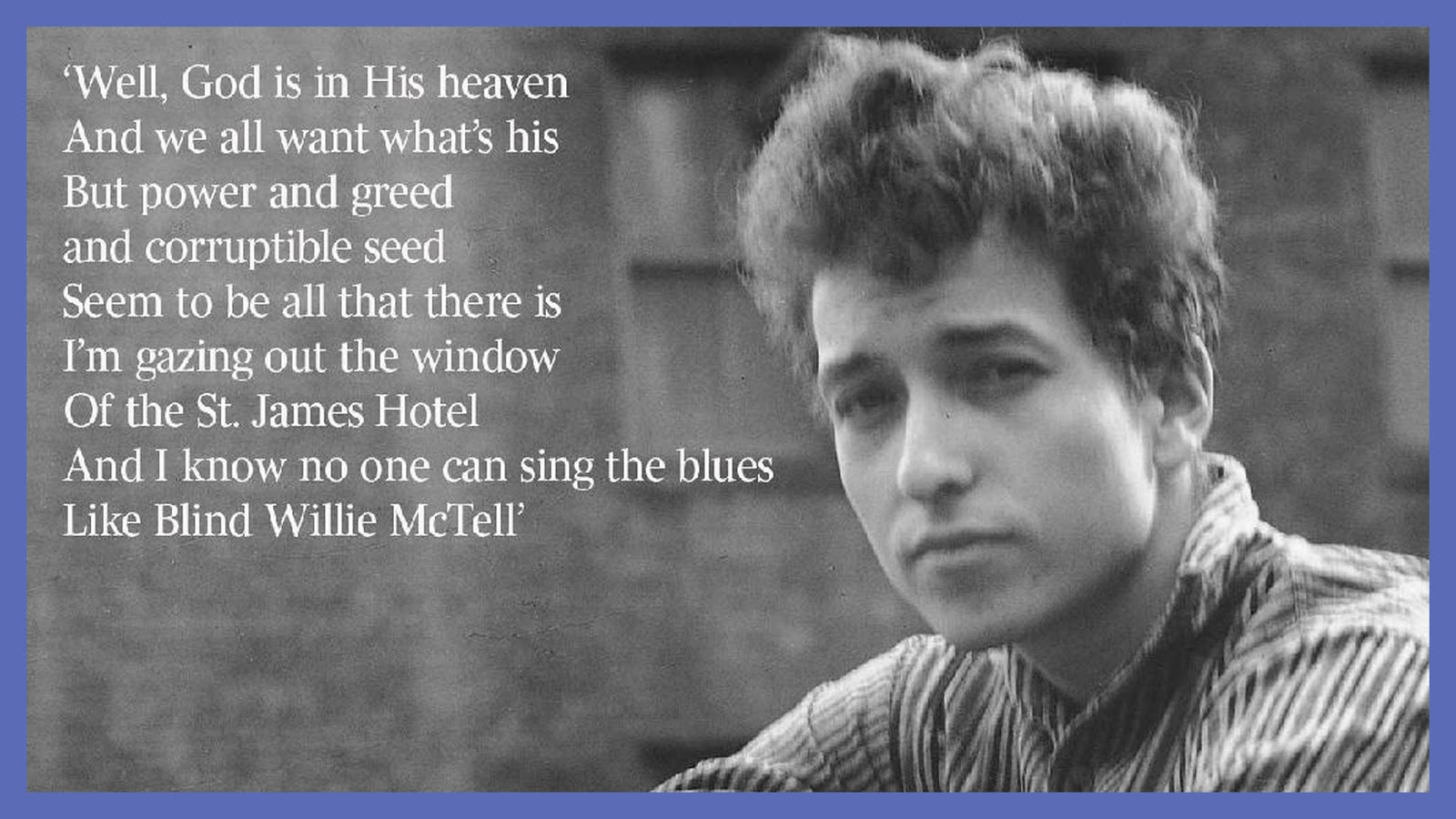
Finally! So how does it feel,Bob? Bob Dylan has been named the winner of
the 2016 Nobel Prize in literature in a stunning announcement that for
the first time bestowed the prestigious award to someone primarily seen
as a musician.
The Swedish Academy cited the American
musician for “having created new poetic expressions within the great
American song tradition.”
Dylan had been mentioned in the Nobel speculation for years, but few
experts expected the academy to extend the prestigious award to a genre
such as pop music. The literature award was the last of this year’s Nobel Prizes to be announced.
The six awards will be handed out on December 10th, the anniversary of prize founder Alfred Nobel’s death in 1896.
Banquet speech by
Bob Dylan given by the United States Ambassador to Sweden Azita Raji, at the
Nobel Banquet, 10 December 2016.
Good evening, everyone. I extend
my warmest greetings to the members of the Swedish Academy and to all of the
other distinguished guests in attendance tonight.
I'm sorry I can't be with
you in person, but please know that I am most definitely with you in spirit and
honored to be receiving such a prestigious prize. Being awarded the Nobel Prize
for Literature is something I never could have imagined or seen coming.
From an
early age, I've been familiar with and reading and absorbing the works of those
who were deemed worthy of such a distinction: Kipling,
Shaw,
Thomas
Mann, Pearl
Buck, Albert
Camus, Hemingway. These giants of literature whose works are taught in
the schoolroom, housed in libraries around the world and spoken of in reverent
tones have always made a deep impression. That I now join the names on such a
list is truly beyond words.
I don't know if these men and
women ever thought of the Nobel honor for themselves, but I suppose that anyone
writing a book, or a poem, or a play anywhere in the world might harbor that
secret dream deep down inside. It's probably buried so deep that they don't even
know it's there.
If someone had ever told me that
I had the slightest chance of winning the Nobel Prize, I would have to think
that I'd have about the same odds as standing on the moon. In fact, during the
year I was born and for a few years after, there wasn't anyone in the world
who was considered good enough to win this Nobel Prize. So, I recognize
that I am in very rare company, to say the least.
I was out on the road when I
received this surprising news, and it took me more than a few minutes to
properly process it. I began to think about William Shakespeare, the great
literary figure. I would reckon he thought of himself as a dramatist. The
thought that he was writing literature couldn't have entered his head. His words
were written for the stage. Meant to be spoken not read.
When he was writing
Hamlet, I'm sure he was thinking about a lot of different things:
"Who're the
right actors for these roles?" "How should this be staged?" "Do I really want to
set this in Denmark?" His creative vision and ambitions were no doubt at the
forefront of his mind, but there were also more mundane matters to consider and
deal with. "Is the financing in place?" "Are there enough good seats for my
patrons?" "Where am I going to get a human skull?" I would bet that the farthest
thing from Shakespeare's mind was the question "Is this
literature?"
When I started writing songs as a
teenager, and even as I started to achieve some renown for my abilities, my
aspirations for these songs only went so far. I thought they could be heard in
coffee houses or bars, maybe later in places like Carnegie Hall, the London
Palladium. If I was really dreaming big, maybe I could imagine getting to make a
record and then hearing my songs on the radio. That was really the big prize in
my mind. Making records and hearing your songs on the radio meant that you were
reaching a big audience and that you might get to keep doing what you had set
out to do.
Well, I've been doing what I set
out to do for a long time, now. I've made dozens of records and played thousands
of concerts all around the world. But it's my songs that are at the vital center
of almost everything I do. They seemed to have found a place in the lives of
many people throughout many different cultures and I'm grateful for
that.
But there's one thing I must say.
As a performer I've played for 50,000 people and I've played for 50 people and I
can tell you that it is harder to play for 50 people. 50,000 people have a
singular persona, not so with 50. Each person has an individual, separate
identity, a world unto themselves. They can perceive things more clearly. Your
honesty and how it relates to the depth of your talent is tried. The fact that
the Nobel committee is so small is not lost on me.
But, like Shakespeare, I too am
often occupied with the pursuit of my creative endeavors and dealing with all
aspects of life's mundane matters. "Who are the best musicians for these songs?"
"Am I recording in the right studio?" "Is this song in the right key?" Some
things never change, even in 400 years.
Not once have I ever had the time
to ask myself, "Are my songs literature?"
So, I do thank the Swedish
Academy, both for taking the time to consider that very question, and,
ultimately, for providing such a wonderful answer. My best wishes to you all,
Bob Dylan Source: Nobel
Prize.org