Accessing Universal Intelligence.
Human Ingenuity and Creativity. Our Cultural Heritage.
Favourite things. Music and Movies. Nature. Items that interest me on any topic.
Albert Einstein's theory of general relativity has held up pretty well after a century out in the world.
The famous theory, which Einstein published in 1915, remains the
bedrock upon which scientists' understanding of the origin and evolution
of the universe rests. It continues to inspire research into some of the most fundamental unanswered questions in physics and astronomy. General relativity "is
now, I think, routinely accepted as the foundation of our description
of the universe at large, which we call cosmology; of black holes, of
neutron stars and of small corrections to the orbits of planets and
spacecraft in our own solar system," said Roger Blandford of the Kavli
Institute for Particle Astrophysics and Cosmology at Stanford
University. [Einstein's Theory of General Relativity Explained (Infographic)]
The nature of gravity
General relativity adds gravity to the theory of special relativity,
which Einstein published in 1905. Special relativity posits that the
laws of physics are the same for all nonaccelerating observers, and that
the speed of light in a vacuum never changes, even if the observer or
the light source is moving.
Special relativity laid out the relationship between energy and mass, in history's most famous equation: E = mc2.
("E" is energy; "m" is mass, and "c" is the speed of light in a vacuum —
roughly 671 million mph, or 1.08 billion km/h). The theory also unified
space and time into a four-dimensional "space-time."
General relativity expanded on this latter idea, explaining that matter
warps space-time, much as a bowling ball set down on a bed creates a
depression in the sheets. This monumental insight did not come to Albert Einstein easily; he earned his way to it, over a decade of intense thought and hard work.
"He had to retrace his steps. He proposed things which he subsequently
retracted. But he kept on going," Blandford told Space.com. "He was
guided not by mathematical ideas or mathematical techniques. He was
guided first and foremost by physics intuition; that extraordinarily
powerful physics intuition which had served him so well in the past did
not let him down here."
General relativity characterizes gravity not as an innate force acting
on objects but rather the consequence of space-time's curvature.
(Imagine a marble rolling down the incline created by the bowling ball
on the bed.)
It's a powerful, radical idea — and it has stood up to intense scrutiny
for a century now, Blandford writes in a special review article
published online today (March 5) in the journal Science.
Confirmation from many quarters
General relativity predicts that light will take a curved path around a
massive object such as a galaxy cluster, which warps the fabric of
space-time significantly. [The History & Structure of the Universe (Infographic)]
This has indeed been observed; astronomers routinely use "gravitational
lenses" to study faraway light sources. In fact, on a smaller scale,
the phenomenon even helps planet hunters search for worlds beyond
Earth's solar system. (Exoplanets can sometimes be detected by studying how their star systems bend light from background objects.)
Peculiarities in the orbit of Mercury around the sun also back up general relativity.
"It explained the anomalous precession of Mercury's perihelion, or the
rotation of the line joining the sun to the point of closest approach of
the planet," Blandford writes in the Science review article.
"Einstein used general relativity to explain a ~10 percent discrepancy
in the precession attributable to the gravitational pulls of the other
planets, ~43 arc sec per century. The agreement today is better than 10−4."
Other types of observational evidence have also helped put general relativity on firm footing, Blandford said.
"We've tested it in many, many different ways," he said. "I think it's
fair to say that there's no credible measurement or observation that
causes one to doubt it within its domain of applicability."
A dark universe
General relativity also implies that the vast majority of the universe
is composed of stuff that humans cannot detect directly or (at this
point) even understand, David Spergel of Princeton University writes in
another review article in the same issue of Science.
Careful study of the motion of matter and light throughout the universe
has revealed that "normal" matter alone cannot explain space-time's
curvature patterns, Spergel notes. Indeed, observations suggest that
just 5 percent of the universe is familiar atomic matter, while 25
percent is dark matter and about 70 percent is dark energy.
Dark matter neither emits nor absorbs light, betraying its existence only through its gravitational effects. Dark energy,
meanwhile, is a mysterious force that's associated with empty space and
is thought to be responsible for the accelerating expansion of the
universe.
In 1917, Einstein inserted a term called the "cosmological constant"
into general relativity, as a repulsive force that would counteract
gravity and achieve a static universe (which was the prevailing view of
the universe's nature at the time). After astronomer Edwin Hubble's
observations in 1929 famously showed that the universe is actually
expanding, Einstein dropped the cosmological constant, allegedly deeming
it the "biggest blunder" of his life.
But the constant looks prescient now that astronomers are grappling with the nature of dark energy.
"Because all of the evidence for dark energy uses the equations of
general relativity to interpret our observations of the universe's
expansion and evolution, an alternative conclusion is that a new theory
of gravity is needed to explain the observations," he adds.
"Possibilities include modified gravity theories with extra dimensions."
The future
General relativity should continue to shape the efforts of physicists,
cosmologists and astronomers far into the future, Blandford said.
For example, researchers will keep using the theory to gain a better
understanding of black holes, neutron stars and other celestial bodies
and phenomena. Scientists will also continue probing the nature of dark
energy and dark matter, in an effort to understand the universe at the
broadest scales.
Finally, and perhaps most excitingly, researchers will keep trying to
unify general relativity with quantum mechanics, to marry the world of
the very large with that of the very small. This grand and longed-for "theory of everything" has eluded physicists thus far, but Blandford said he thinks it's achievable.
"There are many exciting ideas there," he said. "I'll be an optimist and hope that my colleagues can pull this off." With many thanks to Mike Wall at Live Science.
A diamond is classified as a diamond not because of its colour, but
due to its unique molecular make-up. Meanwhile its value is based on
what is known as the four Cs – cut, colour, clarity and carat. Aptly for a gemstone forever associated with engagement rings, the
word diamond comes from the Ancient Greek word for unbreakable or
unalterable. In this Billionaires most expensive guide, we’ll take a look at the world’s 10 most expensive coloured diamonds.
10. The Allnatt Diamond
Worth an estimated $3 million, the Allnatt Diamond is a fancy intense
yellow example of the gemstone and is 101.29 carats in size. It’s named after the British businessman Major Alfred Ernest Allnatt,
who owned it during the 1950s. Mystery surrounds its origins before he
purchased the stone, but it is believed to have been found in South
Africa at the site of what is now the De Beers Premier mine. Allnatt commissioned Cartier to make a flower setting for it. It was
sold for $3 million-plus at Christie’s in Geneva in 1996 to the SIBA
Corporation.
9. The Moussaieff Red Diamond
This 5.11 carat diamond is valued at $7 million and is a fancy red
stone. It is the biggest fancy red ever to be classified but at 5.11
carats, it’s actually quite small compared to some of the other gems on
this Billionaires most expensive countdown. Previously known as the Red Shield Diamond, it was discovered in the
River Abaetezinho in Brazil in 1990. The stone was sold to Moussaieff
Jewellers at the start of the new millennium and takes its current name
from the company.
8. The de Grisogono Green Diamond
This $7.3 million 25 carat green diamond is a cushion-cut stone which
is believed to have originated in South Africa. The stone is said to be
the finest modern example of a green diamond. The stone was put up for sale by Swiss jeweller de Grisogono in 2006 as part of a white gold ring with seven black diamonds.
The stone was owned by Fawaz Gruosi who is believed to have purchased it from a diamond dealer in 1998.
7. Cora Sun-Drop Diamond
Sold at auction for $10.9 million in 2011, just a year after it was
found in South Africa, the Cora Sun-Drop Diamond is the world’s most
expensive vivid fancy yellow diamond. The gemstone is pear-shaped and 110.3 carats in size. It went under
the hammer at Sotheby’s in Geneva to a mystery telephone bidder. Because
the diamond was new to the market and had no previous owners, this is
believed to have further enhanced its value.
6. The Heart of Eternity
The $16 million Heart of Eternity diamond is a 27.64 carat fancy
vivid blue, originally discovered in South Africa at the Premier Diamond
Mine. It was one of diamonds on display at the Millennium Dome in London in 2000 that were the subject of a failed heist. The diamond was cut into its distinctive heart shape by the Steinmetz
group. It is currently owned by a mystery private collector.
5. The Wittelsbach Diamond
This royal diamond is a blue stone that is believed to have
originated in India. It was once part of both the Bavarian and Austrian
Crown Jewels. But the diamond that exists today is markedly different to the blue
stone that was once owned by royalty. It was substantially recut by
Laurence Graff, who paid $16.4 million for it in 2008, in order to
remove flaws from the stone. Around three carats were removed from its size to achieve the aim, and the diamond is now 31.06 carats in size.
4. The Pink Star
This vivid pink diamond is valued at $25 million and is 59.60 carats – the largest vivid pink diamond known to exist. Previously known as the Steinmetz Pink, it was found in De Beers’
South African mine in 1999 and took expert diamond cutters 20 months to
cut and shape. It was sold privately to an unknown buyer in 2007 and was
sold again at auction in 2013.
Pink diamonds are incredibly valuable due to their extreme rarity.
3. Graff Pink Diamond
This fancy intense pink is 24.78 carats in size and is valued at $46
million. It was once owned by the legendary jeweller Harry Winston. It was sold at auction by Sotheby’s in 2010 and is now owned by
collector Laurence Graff. It has been described as one of the greatest
diamonds ever discovered. The origin of the stone, which is emerald cut and mounted in a ring,
is unclear. It belonged to Winston in the 1950s before being sold to a
private collector, who is thought to have kept it for more than 50
years.
2. The Hope Diamond
Worth an astonishing $350 million, the Hope Diamond is a blue stone
that is 45.52 carats in size and according to legend, it is cursed
because so many people associated with it have died. The Hope Diamond is believed to have been mined in India in the 17th
Century and was taken to France, where it was sold to Louis XIV and made
into a cravat pin, known as the French Blue. It disappeared during a
theft of the French Crown Jewels during the French Revolution and is
thought to have been smuggled to England. It’s believed the jewel now
known as the Hope Diamond is just a part of the original French Blue. It was owned by the British Royal Family for a period and ended up in
the US at the start of the 20th Century. It was owned for a time by
jeweller Harry Winston, who eventually agreed to gift it to the
Smithsonian Museum of Natural History, where it is on display in
Washington DC.
1. The Ocean Dream Diamond
No precise estimate of the value of this 5.51 carat stone exists but its incredible rarity means it takes top spot in this Billionaires countdown. The Ocean Dream was the first, and remains one of only a miniscule
number, to be classed as fancy deep-blue green in colour. It gained its
unique colour after being exposed to radiation over millions of years. This amazing stone was found in Central Africa and is part of the collection owned by the Cora Diamond Corporation. So next time you’re shopping for a diamond, don’t automatically look
for the brilliant white variety. The rarity of some coloured diamonds
means they can be incredibly valuable, as well as incredibly beautiful
to look at. By Lynne Thorley Pictures cited in links below. With thanks to Billionaires Australia More from You Tube. For thousand of years, most expensive diamond become one of the most
popular collection of the rich and the king. Diamond is one of the most
wanted mining products. You can be rich instantly if you found a big and
rare diamond in the backyard of your house. These most expensive
diamond are the most wanted one that almost all people in the world want
to save in their mansion or palace. Let’s take a look at those most
expensive diamond in the world
10. The Allnatt Diamond : $ 3 Millions
This
diamond is named after Major Alfred Ernest Allnatt. He was one of the
holders of the diamond. The Allnatt diamond has size of 101.29 carat
(20.258 g) with a cushion cut. The diamond color is rated as fancy vivid
Yellow by the Gemological Institute of America. No one know precisely
where the diamond was found. But some expert say that the diamond was
found where the De Beers premier diamond mine now located.
9. The Moussaieff Red Diamond : $ 7 Millions
The
Moussaieff Red Diamond is 5.11 carats (1.022 g) diamond with triangular
brilliant cut that rated as Fancy Red in colour by the Gemologial
Institute of America (GIA). Although Moussaieff is relatively small
compared to other expensive diamond, this is the largest fancy red ever
rated by GIA.
8. The Heart of Eternity : $16 Millions
The
Heart of Eternity is a 27.64 carats (5.528 g) diamond with a color rated
as Fancy Vivid Blue by the Gemological Institue of America. This
diamond is very rare class of colored diamond. It was cut by the
Steinmetz group before sold to De Beers Group. The diamond itself was
found in premier diamond mine in South Africa.
7. Wittelsbach Diamond : $ 16.4 MillionsThe Wittelsbach diamond (Der Blaue Wittelsbacher) is a 35.36 carats
(7.11 g) blue diamond with size of 40 mm in diameter with 8.29 mm in
depth and VS 2 in clarity. It was become part of both Austrian and
Bavarian crown jewels, with color and clarity has been compared to the
Hope Diamond (you can see below on No. 4).
6. The Steinmetz Pink : $ 25 Millions
The
Steinmetz Pink is 59.60 carats (11.92 grams) of diamond that rated as
Vivid Pink by the Gemological Institute of America. It’s the largest
known diamond that given a color as Fancy vivid pink ever. The Steinmitz
Pink was displayed as part of Smithsonian’s “The Splendor of Diamons”
exhibition.
5. De Beers Centenary Diamond: $ 100 Millions
The
De Beers Centenary Diamond were classified as D levels by the
Gemological Institute of America. It’s the highest grade of a diamond
that colorless and internally and externally flawless. The diamond
itself is 273.85 carats (54.77 grams) in weight. This diamond is the 3rd
largest diamond has been produced by De Beer’s Premier Mine.
4. The Hope Diamond : $350 Millions
The
hope diamond is 45.52 carats (9.10 grams) large diamond that now
located in the Smithsonian Museum of Natural History in Washington DC.
The diamond looks blue in color to the naked eye because the number of
traces of boron in the crystal structure but It shine a red phosphor
under ultraviolet light.
3. The Cullinan : $ 400 Millions
The
Cullinan Diamond is 3,106,75 carats (621.35 grams) diamond and is the
largest rough gem quality diamond ever found in the world. After
polished it become Cullinan I or Star Africa first and at 530.2 carats
(106.0 grams) is the largest diamond in the world until 1985 with the
Golden Jubilee of 545.67 carats (109.13 grams) from the same premier
Mine.
2. The Sancy Diamond : (Unestimated, Priceless)
The
Sancy diamond is 55.23 carat (11.05 grams) of pale yellow diamond that
once was famous as the belonging of the Great Moguls. It’s believed that
the diamond is Indian origin. This is the first large diamonds to be
cut with symmetrical facets. The stone is also unusual because it has no
pavilion – just a pair of crowns, one on the other. This historical
diamond is now kept in the French Crown Jewel collection housed at the
Louvre. 1. Koh-I-Noor : (Unestimated, Priceless)
Koh-I-Noor means as
“Mountain of Light” from Persian. It’s a 105 carat (21.6 grams) diamond
that was once the largest known diamond in the world. The Koh-I-Noor was
originated at Golconda in the Andhra Pradesh state of India. It was
owned by various Sikh, Mughal and Persian rulers that fought each other
from time to time. The stone was found to measure 36.00 × 31.90 × 13.04
mm. The gem remains the property of the British crown and is kept in HM
Tower of London and it’s a popular tourist attraction.
Looks like there could be another for this list, but not a coloured diamond.Still very impressive! From English Alarabya:
‘Flawless’ 100-carat diamond on show in Dubai
An internally “flawless” 100-carat diamond was on show Monday in
Dubai ahead of being sold at auction next month by Sotheby’s, where it
could fetch up to $25 million. The stone, which was discovered a
decade ago in the De Beers mines of South Africa, will go under the
hammer at a “Magnificent Jewels” sale in New York in April, the auction
house said.
One of five diamonds weighing more than 100 carats
that have surfaced on the market over the past 25 years, the jewel’s
estimated sale price is between $19 million to $25 million (18-23.7
million euros), according to Sotheby’s.
The auction house
describes it as the “ultimate emerald-cut diamond, weighing 100.20
carats, D colour, internally flawless” and “unlike any diamond offered
at auction before.” Frank Everett, Sotheby’s vice-president of
sales for jewelry, told AFP in Dubai that the diamond was “for anyone
who really desires the best of the best.”
Everett said the
diamond could be worn as “a pendant on a necklace, or a cuff bracelet or
a ring” although someone might buy it “to admire it just as an object
in its own right.” Sotheby’s hopes that showcasing this “perfect”
diamond in Dubai and other locations ahead of the April sale can help
it attract the attention of the Middle East’s wealthy elite.
Italian Millionaire Suing Christie's over Rare Pink Diamond - The Princie Diamond.
A case in Manhattan is unfolding, involving the heist of a $40 million
rare pink diamond from an Italian millionaire and sale at Christie's.
The bizarre story is taking place in New York, where Italian Amedeo
Angiolillo currently lives. The sole heir of Senator Renato Angiolillo
is suing Christie's auction house after it sold the 300-year-old
34.65-carat Indian diamond to an anonymous bidder, claiming it was on
behalf of someone other than the rightful owner – which he claims to be.
The rare pink gem is dubbed the Princie Diamond and is described by
the claim as “the rarest, perhaps most famous and illustrious pink
diamonds in the world”. It has a long history of being passed down
through generations of Indian rulers. It came into Angiolillo's family's
possession when Renato, founder and editor of famous newspaper Il
Tempo, purchased the jewel from Van Cleef & Arpels in 1961 after
marrying second wife, Maria Girani.
Girani then took custody of the diamond, however the suit claims that
this was as agreed with Angiolillo's heirs and not a permanent
agreement. The claim outlines that many times she told the Angiolillos
that the Princie Diamond and other jewels “belonged to them by
inheritance, and that they would be returned to them after her death”.
Upon his mother's death, Marco Oreste Bianchi Milella, is accused of
claiming incorrectly to be the beneficial owner, before selling the gem
via a Christie's auction for $40 million. Angiolillo and his nieces and nephews intend to recover the diamond
from the unknown buyer as a result of their claim in court, as well as
receiving a sum of damages. Angiolillo says that he holds insurance
documents detailing that he is the rightful owner of the precious pink
diamond. Picture credit: Aneka Info
It’s the result of 50 years of conservation efforts, but for the
first time in more than a century, baby saddleback giant tortoises (Chelonoidis ephippium) have been born on the Galapagos Island of Pinzón.
"We found 10 tiny, newly hatched saddleback tortoises on the island early last month,” the team from Galapagos Conservancy reports in Nature.
"There could be many more, because their size and camouflage makes them
hard to spot. Our discovery indicates that the giant tortoise is once
again able to reproduce on its own in the wild."
The island of Pinzón has an area of just 18 km2, and sits in the
geographical centre of all the Galapagos islands. Being very low on
defence mechanisms, the giant tortoise population on Pinzón was
demolished very quickly with the introduction of rats to the island by
visiting 17th and 18th century sailors, who ending up eating a lot of
them themselves. As tortoise breeding can be an excruciatingly slow process,
it takes a whole lot of time to build up a population again, but
researchers are thrilled with the progress they’re now seeing from a
conservation program set up way back in the 1960s.
"This involved
collecting eggs and raising hatchlings in captivity for four to five
years to reach ‘rat-proof’ size, as well as drastic rat-eradication
measures,” the team reports. "These strategies have now enabled the species to stabilise itself.”
As
well as being great news in and of itself, it’s a promising precedent
that conservationists working on Australia’s Lord Howe Island would be
no doubt be super-excited about. In an effort to reintroduce
captive-bred Lord Howe Island stick insects (Dryococelus australis), one of the rarest - and most bizarre - insect species in the world to their native island home, researchers are undergoing a process of total rat eradication on Lord Howe Island.
It’s
bad news for the rats - it’s not their fault they’re so incredibly
successful at multiplying and surviving - but it’s the best chance our
endangered animals have of getting their homes back.
SHEET MUSIC HERE: http://bit.ly/1lYTB6K at Musicnotes.com. MP3 HERE: http://bit.ly/1F0IRLi Many
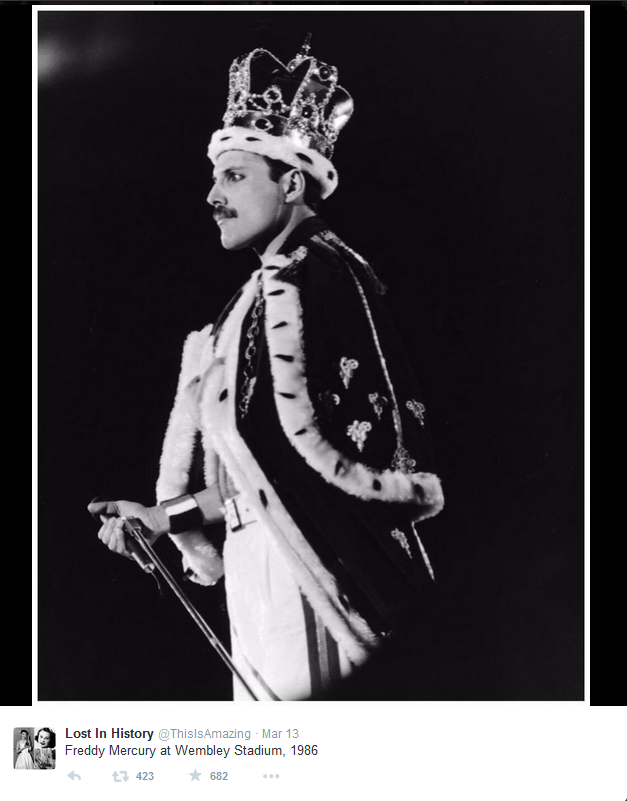
thanks to Freddie Mercury (Queen) for his brilliant musical
orchestration, “Bohemian Rhapsody” in 1975. This arrangement and
performance by Jarrod Radnich travel from the sentimental ballad
segment, to the quirky and fun operatic segment, to the “head banging”
rock segment (with a nod to the famous Wayne’s World sing-along). Produced by Mastermind Studios Music Composition & Piano Performance: Jarrod Radnich Executive Producers: Anne LaFaye & Kathleen Marsh Directors: Jarrod Radnich & Thor Wixom Cinematographer: Thor Wixom Editors: Jarrod Radnich and Anne LaFaye Piano: Mason & Hamlin Digital Imaging Technician: Shiblon Wixom Gaffer: Laurence Malloy Jib Operator: Victor Pancerev Camera Assistant: Joel Swanner Key Grip: Joseph Webb Sound Engineering: Mastermind Studios Hair: Bernadette Ingalls (Kole Michael Salon) Wardrobe: Shrine of Hollywood & Barbara Bartley (Custom Craft Tailoring) Special Thanks to: Musicnotes.com for their unending support And EMI Glenwood Music Corp. obo Queen Music Ltd. EMI Music Publishing. Ltd Sony/ATV Music Publishing

 , in history's most famous equation: E = mc2.
("E" is energy; "m" is mass, and "c" is the speed of light in a vacuum —
roughly 671 million mph, or 1.08 billion km/h). The theory also unified
space and time into a four-dimensional "space-time."
, in history's most famous equation: E = mc2.
("E" is energy; "m" is mass, and "c" is the speed of light in a vacuum —
roughly 671 million mph, or 1.08 billion km/h). The theory also unified
space and time into a four-dimensional "space-time."