Accessing Universal Intelligence.
Human Ingenuity and Creativity. Our Cultural Heritage.
Favourite things. Music and Movies. Nature. Items that interest me on any topic.
Ghost Boy is the compelling story of Martin Pistorius who at the age
of 12 fell inexplicably sick. First he lost his voice and stopped
eating, within eighteen months he was mute and wheelchair-bound.
Martin's parents were told that an unknown degenerative disease had left
him with the mind of a baby and with a poor prognosis for survival.
The book eloquently weaves its way as Martin recounts his journey of
recovery against all the odds. It is a brave and moving account of his
struggle to communicate in a world full of changes. Martin describes
himself as ‘a man-child reborn in a world he didn't know’ , unable to
remember anything before his illness but clearly aware of all around him
in his world of silence. Through Martin's story we get a glimpse what
it is like to be unable to communicate yet feeling and understanding
everything. Martin's emergence from his darkness enables us to celebrate
the human spirit and is a wake-up call to cherish our own lives. With thanks to Martin Pistorius
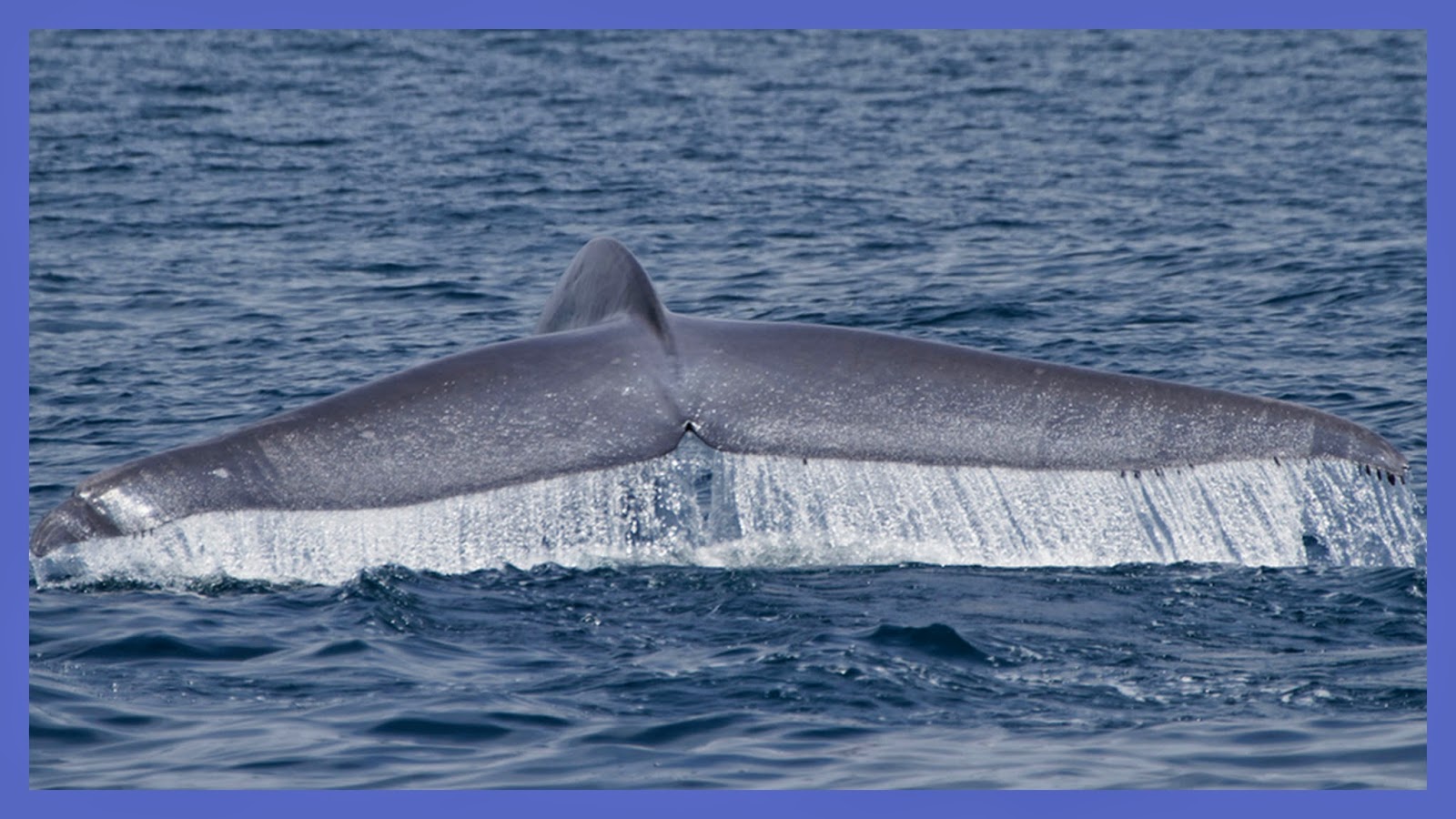
Another good news story! A NEW analysis suggests there are as
many blue whales living off the coast of California as there were
before humans started hunting them to near extinction 110 years ago. The Los Angeles Times reports there are about 2,200 blue whales
swimming on the eastern side of the Pacific Ocean, from Mexico up into
Alaska.
Researchers previously assumed that the pre-whaling
population was higher than that. However, researchers at the University
of Washington, using historical data to estimate the number of whales
caught between 1905 and 1971, when whaling became illegal, said the
current population is 97 per cent as large as it was before 1905.
“For
us, this is a great conservation success story,” said Cole Monnahan, a
lead author of the paper published Friday in the journal Marine Mammal
Science. “We caught way too many whales from this population. But when
we left them alone, they recovered.”
Blue whales are found throughout the world. But for this study, the
researchers looked at the population of blue whales that are most
visible while at feeding grounds off the California coast. They took
into account recently released numbers of whales caught by Russian
whalers, and used acoustic calls produced by the whales to distinguish
the California blue whale population from those caught in the northern
Pacific near Russia and Japan. They determined that approximately 3,400 California blue whales were killed during the period studied.
“Considering
the 3,400 caught in comparison to the 346,000 caught near Antarctica
gives an idea how much smaller the population of California blue whales
was likely to have been,” said Trevor Branch, an assistant professor of
aquatic and fishery science at the university. The researchers
noted that even though around 11 blue whales get struck by ships a year
along the West Coast, their population growth has levelled off in recent
years. They suggest that means the population may be almost back to
normal.
“Before this study some people thought that number should
be going up. But if there were about 2,200 whales to begin with, then
that is what the environment can support,” Monnahan said.
Ever felt completely helpless and unable to make a
difference? This young lady was shot through the head, made a miraculous
recovery, and now she is an inspiration to so many!
She is only 16 years old.
Education is the answer to so many things, she
says. Her story transcends politics.
Malala may have narrowly missed out on winning the
Nobel Peace prize this year, but she will always be an inspiration to millions.
Here are some of our favourite quotes.
Malala Yousafzai to receive Anne
Frank courage award
January 2014
Pakistani
teenage activist Malala Yousafzai is to receive an award for moral courage, it
has been announced.
The 16-year-old, who was shot by
the Taliban in 2012, will be honoured with the Anne Frank Award at a ceremony in
London on Thursday. Malala, who campaigns for girls'
access to education, is studying for her A-levels and cannot attend the
event. Her father, Ziauddin Yousafzai, a
UN adviser on education, will accept the award on her behalf. It will be presented by the
actress Naomie Harris, who recently starred as Winnie Mandela in the film
"Mandela, Long Walk to Freedom".
'Remarkable'
Co-founder and executive director
of the Anne Frank Trust UK, Gillian Walnes said: "Malala is one of the most
remarkable people we have encountered, both as a teenager and an educator, and
is as inspirational a figure as Anne Frank." Malala was seriously injured when
she was shot in the head by a Taliban gunman in north-western
Pakistan. She was targeted because of her
campaign for girls' education. The schoolgirl was treated in a
Pakistani hospital before being transferred to the UK for surgery and
rehabilitation at the Queen Elizabeth Hospital in Birmingham. She has since written a memoir
about her experiences and was last year considered a contender for the Nobel
Peace Prize. An event in the Pakistani city of
Peshawar to launch the book was on Tuesday cancelled because of security
concerns. With thanks to The BBC
A PORTRAIT of a Pakistani teenager shot by the Taliban for championing education for girls will be auctioned next month.
The oil painting by Jonathan Yeo shows Malala Yousafzai doing her homework. It's being donated by the artist to benefit the Malala Fund, which campaigns for girls' education. Christie's New York is offering the portrait on May 14, and it's expected to bring $US60,000 ($A64,200) to $US80,000. It was painted months after the then-15-year-old Malala was shot as she travelled to school in 2012. President Barack Obama called Malala the "bravest girl in the world". She now lives in England. Yeo is a portrait painter. His works are in the Royal Collection and the National Portrait Gallery in London, among others. With thanks to The Australian
She is a very worthy recipient! More so than many before her! And the youngest ever!
CHILDREN’s rights
activists Malala Yousafzai of Pakistan and Kailash Satyarthi of India have been
awarded the Nobel Peace Prize.
The Norwegian Nobel Committee
cited the two “for their struggle against the suppression of children and young
people and for the right of all children to education.”
Yousafzai, now 17, is a
schoolgirl and education campaigner in Pakistan who was shot in the head by a
Taliban gunman two years ago.
Satyarthi, 60, has maintained the
tradition of Mahatma Gandhi and headed various forms of peaceful protests,
“focusing on the grave exploitation of children for financial gain,” the Nobel
committee said.
The Nobel Committee said it
“regards it as an important point for a Hindu and a Muslim, an Indian and a
Pakistani, to join in a common struggle for education and against
extremism.”
The founder of the Nobel Prizes,
Swedish industrialist Alfred Nobel, said the prize committee should give the
prize to “the person who shall have done the most or the best work for
fraternity between nations, for the abolition or reduction of standing armies
and for the holding and promotion of peace congresses.”
The committee has interpreted
those instructions differently over time, widening the concept of peace work to
include efforts to improve human rights, fight poverty and clean up the
environment.
With thanks to The
Australian – October 10th.
Malala Yousafzai accepts Nobel Peace Prize for ‘voiceless’ children
MALALA Yousafzai celebrated her Nobel Peace Prize where she always
wished to be: in school.
The
Pakistani girl once shot by the Taliban for daring to want an education just
like the boys celebrated being the joint winner of the peace prize with her
classmates at Edgbaston High School for girls in Birmingham, the city in central
England that she now calls home.
The
teenager had travelled to Birmingham for medical treatment after being targeted
by the Taliban for her relentless objections to the group’s regressive
interpretation of Islam that limits girls’ access to education. She was shot
while returning home from school in Pakistan’s scenic Swat Valley two years ago,
almost to the day.
“This award is for all those children who are voiceless, whose
voices need to be heard,” she said at a press conference at Birmingham’s
Library. “I speak for them and I stand up with them. And I join them in their
campaign.”
She
said it was an honour for her to share the prize with Kailash Satyarthi of
India, 60, who has spent a lifetime working against child slavery and
exploitation. She also invited the prime ministers of both India and Pakistan to
attend the Nobel awards ceremony.
Malala’s case won worldwide recognition, and the teen, now 17,
became a symbol for the struggle for women’s rights in Pakistan. In an
indication of her reach, she spoke before the United Nations and made the
shortlist for Time magazine’s “Person of the Year” for 2012. But
the journey was simply improbable.
On
October 9, 2012, Malala climbed into the back of a small pick-up truck used to
transport Swat Valley children home from school. They laughed and talked as the
truck rumbled over roads lined with pot holes.
As
they approached a narrow bridge over a garbage-strewn stream, a masked man with
a gun suddenly stopped the truck. Another man with a pistol jumped into the
back. “Who
is Malala?” he shouted.
The
girls did not answer but heads automatically swivelled toward her. The man
raised his pistol. One bullet hit Malala on the top of her head. Two other
students were also hit, less seriously.
Malala was transferred to a military hospital near Islamabad, the
Pakistani capital, as her head swelled dangerously. Her father, Ziauddin, was
certain that his daughter would not survive the night. He sent a message to his
brother-in-law in Swat to prepare a coffin.
Pakistani doctors removed a bullet that entered her head and
travelled toward her spine before she was flown to Britain for more specialised
brain trauma care. She woke up a week later at Queen Elizabeth Hospital in
Birmingham, England.
She
says she regained consciousness with one thought: “Thank God I’m not
dead.”
Malala gradually regained her sight and her voice. She was
reunited with her parents. Soon there were pictures, stuffed animals at her
side. She sent messages to wellwishers. Three months later she walked out of the hospital, smiling shyly
as she cautiously strode down the corridor.
“She
is quite well and happy on returning home — as we all are,” her father said at
the time. Pakistan made Malala’s father its education attache in Birmingham
for at least three years, giving the family stability and Malala a safe place to
go to school.
She
went back to school as soon as she could, and confessed that math was her least
favourite subject. She kept campaigning for the rights of children to go to
school — meeting President Barack Obama, attending rights conferences, becoming
the keynote speaker at corporate events in London. She began rubbing elbows with
people who had the power and the money to help her realise her
dreams.
All
along, she delighted many by simply being young, determined and most of all,
herself. At a
Vodafone conference celebrating women, she confided that she didn’t have a
mobile phone. The crowd gasped, but chuckled at the notion of a teenager who
admitted she had no need for a phone.
With
British journalist Christina Lamb, she co-authored a memoir, “I am Malala,”
which revealed to the world that she was, in fact, also a regular teenager.
There’s a part of her that loves the TV show “Ugly Betty,” whose main character
works at a fashion magazine. She likes pop star Justin Bieber, watches the
television cooking show “Master Chef.”
And
yesterday, the people who helped her on the journey — and those just touched by
her story along the way — couldn’t help but be swept up by the magic of it
all.
“Malala is an inspiration for the many women in Afghanistan and
Pakistan who have been fighting for their rights and struggling against the
misogynous policies of the Taliban and local warlords,” said David Cortright,
co-author of “Afghan Women Speak” and a professor at the University of Notre
Dame in Indiana. “As we know, people learn best from personal stories. Malala’s
story is a powerful antidote to extremist propaganda, and the Nobel Prize
reinforces its impact.”
Doctors in Birmingham offered congratulations, noting her focus
and dedication. And the people of the city that threw its arms out to welcome
her simply nodded their heads: No surprise at this news. She’s liked here, well
known. Malala has embraced the city, proudly describing herself as a “Brummie”
like other locals.
“Sure, puts a bit of pride into it,” said John Mullan, 78, an
aluminium worker and resident of Birmingham, said after the Nobel Prize news.
“She’s just young girl who stood up to them. Many other people wouldn’t have
done that.”
Malala remains determined to return to Pakistan one day and enter
politics. In Birmingham on Friday, her growing polish was clear. She spoke from
the heart in three languages, offering an almost uncanny combination of a
teenager with a vision and a diplomat with a platform.
She
did a need a box though, so that she could be seen over the podium. A small
concession, but necessary to be heard.
She
will split the peace prize’s $1.1 million cash award with co-winner Satyarthi.
Malala said the joint prize gives a message that the people of both countries —
and people who are Hindu and Muslim — can work together.
“We
support each other,” she said.
Her
parents and brothers came, too, and posed together for family photographs while
the world’s media begged them to look their way. Her normally reticent mother,
who has more than once hidden when cameras emerged, stood alongside, looking
straight ahead. Beaming. But
what everyone wanted to know was: how did she learn the news? How did a
17-year-old who just received the world’s highest honour react after being
pulled out of chemistry.
“I
felt really honoured,” she said with a schoolgirl gush. There was probably some
jumping up and down, but she didn’t mention that.
Then
she turned around and rejoined the other girls. She was back in time for
physics.
A POWERFUL breakaway faction of the
Pakistani Taliban threatened teenage education activist Malala Yousafzai
with "sharp and shiny knives", hours after she was declared joint
winner of the 2014 Nobel Peace Prize. JAMAAT ul Ahrar, which in August separated from Tehreek-e-Taliban
Pakistan (TTP) also known as the Pakistani Taliban - posted its response
to the win on Twitter late Saturday. "Characters like Malala should
know that we are not deterred by propaganda of [non-believers]. We have
prepared sharp and shiny knives for the enemy of Islam," tweeted
spokesman Ehsanullah Ehsan.
"Malala speaks so much against guns
and armed conflicts. Does she not know that the founder of her recent
Nobel award was the inventor of explosives," the spokesman said. Malala, a 17-year-old education activist, survived a gunshot wound to the head by a Taliban gunman in 2012. The mainstream TTP, an umbrella organisation of over a dozen groups, has not commented on Malala's accolade.
Malala has received praise in Pakistan for becoming the youngest-ever
Nobel Peace laureate, with all major newspapers running front page
stories on her achievement.