Showing posts with label Places. Show all posts

May 02, 2014

Solved! How Ancient Egyptians Moved Massive Pyramid Stones


It does say "may have", so will we ever know for sure? I doubt it.

The bigger question is:
How did they raise the huge blocks to such heights? Even if today's technology were ever to be used to replicate the pyramids it would still present quite a challenge.
                                                                 
The ancient Egyptians who built the pyramids may have been able to move massive stone blocks across the desert by wetting the sand in front of a contraption built to pull the heavy objects, according to a new study.

Physicists at the University of Amsterdam investigated the forces needed to pull weighty objects on a giant sled over desert sand, and discovered that dampening the sand in front of the primitive device reduces friction on the sled, making it easier to operate. The findings help answer one of the most enduring historical mysteries: how the Egyptians were able to accomplish the seemingly impossible task of constructing the famous pyramids.

To make their discovery, the researchers picked up on clues from the ancient Egyptians themselves. A wall painting discovered in the ancient tomb of Djehutihotep, which dates back to about 1900 B.C., depicts 172 men hauling an immense statue using ropes attached to a sledge. In the drawing, a person can be seen standing on the front of the sledge, pouring water over the sand, said study lead author Daniel Bonn, a physics professor at the University of Amsterdam. [Photos: Amazing Discoveries at Egypt's Giza Pyramids

"Egyptologists thought it was a purely ceremonial act," Bonn told Live Science. "The question was: Why did they do it?"

Bonn and his colleagues constructed miniature sleds and experimented with pulling heavy objects through trays of sand.

When the researchers dragged the sleds over dry sand, they noticed clumps would build up in front of the contraptions, requiring more force to pull them across.

Adding water to the sand, however, increased its stiffness, and the sleds were able to glide more easily across the surface. This is because droplets of water create bridges between the grains of sand, which helps them stick together, the scientists said. 

It is also the same reason why using wet sand to build a sandcastle is easier than using dry sand, Bonn said.

"If you use dry sand, it won't work as well, but if the sand is too wet, it won't work either," Bonn said. "There's an optimum stiffness."

The amount of water necessary depends on the type of sand, he added, but typically the optimal amount falls between 2 percent and 5 percent of the volume of sand.

"It turns out that wetting Egyptian desert sand can reduce the friction by quite a bit, which implies you need only half of the people to pull a sledge on wet sand, compared to dry sand," Bonn said.

The study, published April 29 in the journal Physical Review Letters, may explain how the ancient Egyptians constructed the pyramids, but the research also has modern-day applications, the scientists said. 

The findings could help researchers understand the behavior of other granular materials, such as asphalt, concrete or coal, which could lead to more efficient ways to transport these resources.

Follow Denise Chow on Twitter @denisechow. Follow Live Science @livescience, Facebook & Google+.

Original article on Live Science.

Related posts: 


Archaeologists Digging Up Cecile B DeMille's Movie Treasures
Tuthmosis-era Temple Found Under Egyptian House 


China's Lost Civilization: The Mystery Of Sanxingdui
Symbolic Tomb of Egyptian God Osiris Found
Some Rare and Important Archaeological Finds
Easter Island: Scientists Are Closer To Understanding What Wiped Out Its Society
Relief of Queen Nefertiti
Unique Mosaic Images Uncovered in Fifth-Century Synagogue
Philip of Macedonia, Greece’s Ancient King, Found
England’s Lost Colonists ‘Went Native’ In America
The Cave of Altamira and Paleolithic Cave Art of Northern Spain
The Antikythera Mechanism: Second Expedition Seeks More Mechanism Remains 
 Discovery Of Ancient Cave Paintings In Petra
Scientists Find ‘Superhenge’ That Could Be Five Times The Area Of Stonehenge
Rome Reborn – An Amazing Digital Model of Ancient Rome
A Day in Pompeii 
King Tut’s Egyptian Tomb May Hide Queen Nefertiti 
Gem-Filled Warrior's Tomb Discovered in Ancient Greek City
Amenhotep’s Fragmented Book Of The Dead Found 
Acra: Ancient Citadel Unearthed In Jerusalem 
Glastonbury Legends, King Arthur’s ‘Grave’, Made Up For Cash By Monks 
Is Queen Nefertiti Buried In King Tutankhaman’s Tomb? - Latest News
King Hezekiah's Seal Impression Found
Spanish Galleon San Jose Discovered Laden With Treasure Off Colombia 
Has The Lost Island Of Kane Been Found?
'Britain's Pompeii' Found at Bronze Age Settlement  
Babylonians Tracked Jupiter with Fancy Math, Tablet Reveals 
New Clues to Ancient Roman Art Discovered in Egyptian Mummy Portraits
Ancestral Puebloans Were Hit By Boom and Bust
 Bible Breakthrough Found In Israel
Nefertiti Still Missing: King Tut's Tomb Shows No Hidden Chambers

December 10, 2013

On Germany's Fairytale Trail - The Sleeping Beauty Castle


There are some fairy tales I really like but there are others that I consider almost unsuitable for children as they seem somewhat disturbing. 
Or is it perhaps that there is no "and they lived happily ever after ending"? 

For example I really don't like "The Red Shoes" by Hans Christian Andersen but I like others by him, for example "The Ugly Duckling". I don't like all of the stories written by the Brothers Grimm either,but there are some very good ones!

Like many nursery rhymes some fairy tales are rooted in social conditions that existed at the time they were written and have a much deeper and possibly even a more frightening meaning.
For example was "Ring a Ring of Roses" about the Black Death or plague?

I have always liked "Sleeping Beauty" and "Cinderella", especially the versions by Charles Perrault.

Below is the Walt Disney version of "Cinderella" which I grew up with.

Looking at references on the Brothers Grimm and Perrault it gets a bit confusing as to who wrote what!


Perrault lived in the seventeenth century so perhaps he deserves more credit?
The Brothers Grimm came somewhat later.

Perhaps many of these tales and rhymes simply reflect the human condition - good and bad?


PUSS in Boots strides towards me, a handsome fellow with a walrus moustache and a rapier on his belt. Next comes Red Riding Hood, a blonde girl with clogs that tap on the floorboards of the stage. Behind her slinks the Wolf, his eyes dark, his haunches quivering with power and desire. 


Jasmine the puppeteer looks up from her marionettes. "I like the Cinderella puppet best, she is so beautiful. But at night it's scary in here. If you're rehearsing, there are shadows in the corners and things creak."


She folds the wolf away into the box where he lives and whispers in his ear: "Good night."

We are backstage at the puppet theatre in Steinau, central Germany. It's the town where the Brothers Grimm grew up and heard their first fairy stories. Even today, it's a magical place of half-timbered houses, a stone fountain in the cobbled square carved with fairytale figures. I am here - with my two children - to enter that world of childhood stories on which we all grew up, in the places they were found.


This year, the region of Hesse is celebrating the 150th anniversary of the death of Jacob Grimm, the elder of the two remarkable brothers who collected German folktales and published them in a series of books from 1812 to 1857. Steinau is the start of Hesse's Fairytale Route, which follows the places where Jacob and Wilhelm lived, and where the tales were set.


Their journey, and ours, starts here, at their childhood home - a half-timbered manor house where they lived in the 1790s. Inside, it shows displays on their lives, and the garden has a wooden cage with Hansel trapped inside. My daughter Sarah, 11, pokes a stick through the bars to see if he's fat enough to eat. Benjamin, 12, shakes an apple out of the tree above: luckily it is not poisoned.


I scoop them up and drive them off to a farmhouse in a forest. The Brathahnchenfarm Hotel is up a narrow track in a wood. Its ground floor is a series of low tavern rooms, rough walls lit by lanterns hanging from blackened beams. A fireplace crackles at one end, where spits of meat turn and smoke. It's the kind of place where stories might be told on a winter's night; or where a scullery maid might sweep cinders from a hearth and earn herself a nickname.


We enter the fairytale world more formally next day, 96km north, at the Marchenhaus in Alsfeld. A cathedral bell clangs above a tangle of 16th-century lanes. The Haus has "1628" etched above its wooden door and a well with a frog perched on its rim. Its white walls and brown timbers look like icing sugar and gingerbread. We tiptoe in.


The rooms of this museum are decorated with life-size tableaux from the tales. Statues of Hansel and Gretel creep up to a cottage where an old woman leers by an oven door. Rumpelstiltskin weaves gold thread from sweet-smelling bales of straw. A witch's kitchen features a black cat and a row of herbs above an iron stove. A storyteller eyes us up. "I am a herb woman," she announces. "I grow them in my garden. Stories come from them."


We leave fairly hastily and head for the safety of Snow White's cottage. It's an hour's drive away, in a village called Bergfreiheit. The cottage fails to impress Benjamin, who says it is a fake. But Sarah is amused by its seven bunk beds, the seven chairs around its kitchen table and the photo we take of ourselves in dwarfish hoods.


But on the edge of the village is a piece of real folklore. 

The Kupferbergwerk mine is all that's left of an industry that may explain those seven dwarves. Off to work they went, with picks and shovels to dig copper and gold in the wooded hillside here, which is riddled with copper mines from the 16th century. These were often worked by children, whose short stature gained them a local nickname: dwarves.


You can go inside a disused shaft that dates back to 1552. Wooden pitprops frame rough walls as you descend its long dark tunnel. "This is copper," says the guide, pointing at a smear of green, "and this is fool's gold," by a wall of glittering crystals.


Miners here were given special freedoms and the village became a haven for runaways. Bergfreiheit translates as "freedom mountain". It's the perfect setting for a tale of escape and transformation such as Snow White's.


But there is more. A display at the cottage suggests the model for Snow White was Margarete of Waldeck, the beautiful daughter of a local count who fled from a jealous stepmother and died in 1554 - of poisoning. Her brother owned these mines. About then, a scandal spread of a father who had poisoned his children with bad apples. So this is how the tales emerged, from histories and scare stories woven together.


Margarete's castle of Waldeck is nearby, and that is where we'll stay tonight. These days it's an elegant hotel. Its towers and battlements rise above a glittering lake and we enter through a gothic hall. This is the world of princesses and kings, which fairytale figures might tame through marriage or success, but which also oppresses them - like Snow White or Cinderella. The heroes of the tales are seldom grand: more often they are woodcutters, peasants, fishermen and their fates impart the wisdom of the common folk.


Next day we descend to the dungeons. "Creepy or what?" says Sarah with a thrill of fear. Among the stone vaults is a torture chamber, a reminder of the world of power around the tales. There's a whipping bench and an executioner's block, a woodblock map of noble estates dated 1575, and a hand-drawn family tree with several Margaretes. I wonder which one she was.


To get a firmer grip on our history, we drive north to the city of Kassel, where the Grimm brothers moved from Steinau in 1798. They seem always to have lived close to each other, sharing a mission in life. In Kassel, they worked as librarians and published their classic book of Kinder- und Hausmarchen - tales for children and households - in 1812. This was a time of revolution and nationalism. Napoleon had occupied then abandoned the region, leaving behind new ideas about the power of the people and inspiring resistance to invaders. These would coalesce in the brothers' work, with its search for the soul of a people through their stories, and its wish to establish a German identity.


The city houses an elegant museum to the brothers and an exhibition to mark Jacob's anniversary year. We ramble through the latter, past manuscripts and portraits and first editions of their books. Then we head to the edge of town looking for an 18th-century roadside inn, the Brauhaus-Knallhutte. Here Jacob and Wilhelm gathered stories from the innkeeper's daughter, Dorothea Viehmann, who heard them from travellers. Still it is a roadside place - next to a ring road, behind a carpark, on an industrial estate. But inside it's a delight. There's a brass bar, a long dining room with dark beams and red banquettes, and soft light falling through stained-glass windows of huntsmen and barmaids.


Our final stop may or may not have a Grimm connection. But if it doesn't, it should. Sababurg claims to be Sleeping Beauty's castle. Its pepper pot towers from 1334 are surrounded by thickets of roses and magnificent beech woods that would deter many a prince. Inside the ruined great hall, we catch the daily performance of Sleeping Beauty. A young man in red velvet is wooing a pretty blonde, pink roses woven in her waist-length hair.


Walking on to the battlements, I spot a herd of deer on the slope below, like the strangely met animals of myths. Then we unlock a door at the foot of a tower and clamber up a spiral stair. On a landing is a spinning wheel. At the top are our rooms for the night, each with a four-poster bed. For the castle has been transformed into a wildly romantic hotel.


But that night, as we hop into the great carved beds, the children are spooked by the ruins and moonlight. We have stepped too far into the imaginative power of the tales. It's a long night, with every creak of ancient wood a fright. I read them the tales, where every ordeal leads to a happy ending.


In the bright light of the morning, we walk around the grounds, which claim to be Europe's oldest zoological gardens, dating from 1571. Roaming free are herds of deer, muskox and wild boar. At the far end we spot a creature that haunts the tales, as once he haunted the untamed woods of Europe: a wolf. He stares at us. His eyes are black and burning. He is the fear we meet in fairy stories and learn to overcome.


Driving away from the castle, we stop in an endless stand of fir trees. There are wild blackberries among long grass, pine needles on raw earth, and rows of trees stretching away forever. We seem tiny in this world. The branches are crooked fingers, clutching out at us. We are children among dark powers. 

 Once these forests stretched across northern Europe and Asia, and they figure still - in fairytales, in Shakespeare, in Hollywood movies - as a place of challenge and change. Then Sarah picks a blackberry and Benjamin lobs a pine cone at me, and we are innocents once more, protected by the joy of our journey and the wisdom of what we have seen.


Jonathan Lorie was a guest of the Hesse tourism board.


With thanks to The Australian 

Further reading:


Sleeping Beauty Castle - Clip above - HD footage, information and facts on the favorite castle of the brothers Grimm; the Sleeping Beauty Castle. This castle is the inspiration for the story of the Sleeping Beauty and one of the highlights of the scenic Fairy Tale Route in Germany.
                                                                 

Above: The Walt Disney Sleeping Beauty.

Whilst not really suitable for very young children, 'Maleficent' with Angelina Jolie, makes for an interesting prequel.


Related:
'The Great Gatsby': Seven Life Lessons
Charles Dickens: Literary Legend 
Spain Finds Don Quixote Writer Cervantes' Tomb In Madrid 
Where Do Fairy Tales Come From? 
Winnie The Pooh Named Kids' Favourite Book 
The Top 10 Shakespeare Scenes 
The Best and Worst of Hollywood's Book Adaptations? 
Is This Pasted Note Jane Austen's Final Missive? 
Sherlock Holmes: Arthur Conan Doyle’s Hero Still Going Strong 
Alice in Wonderland at 150 
Sir John Monash: Grantlee Kieza’s Biography
Fairy Tales Are Grim! 


December 02, 2013

Some Fascinating Pictures


Snowflake close-up 

Baby Jaguar

Sunset
                                    
                                                                          
Venice

 Baby Owls Hiding Under Toy Owl

New York City At Night In The Fog


Police Dog on his first day of training 
                  
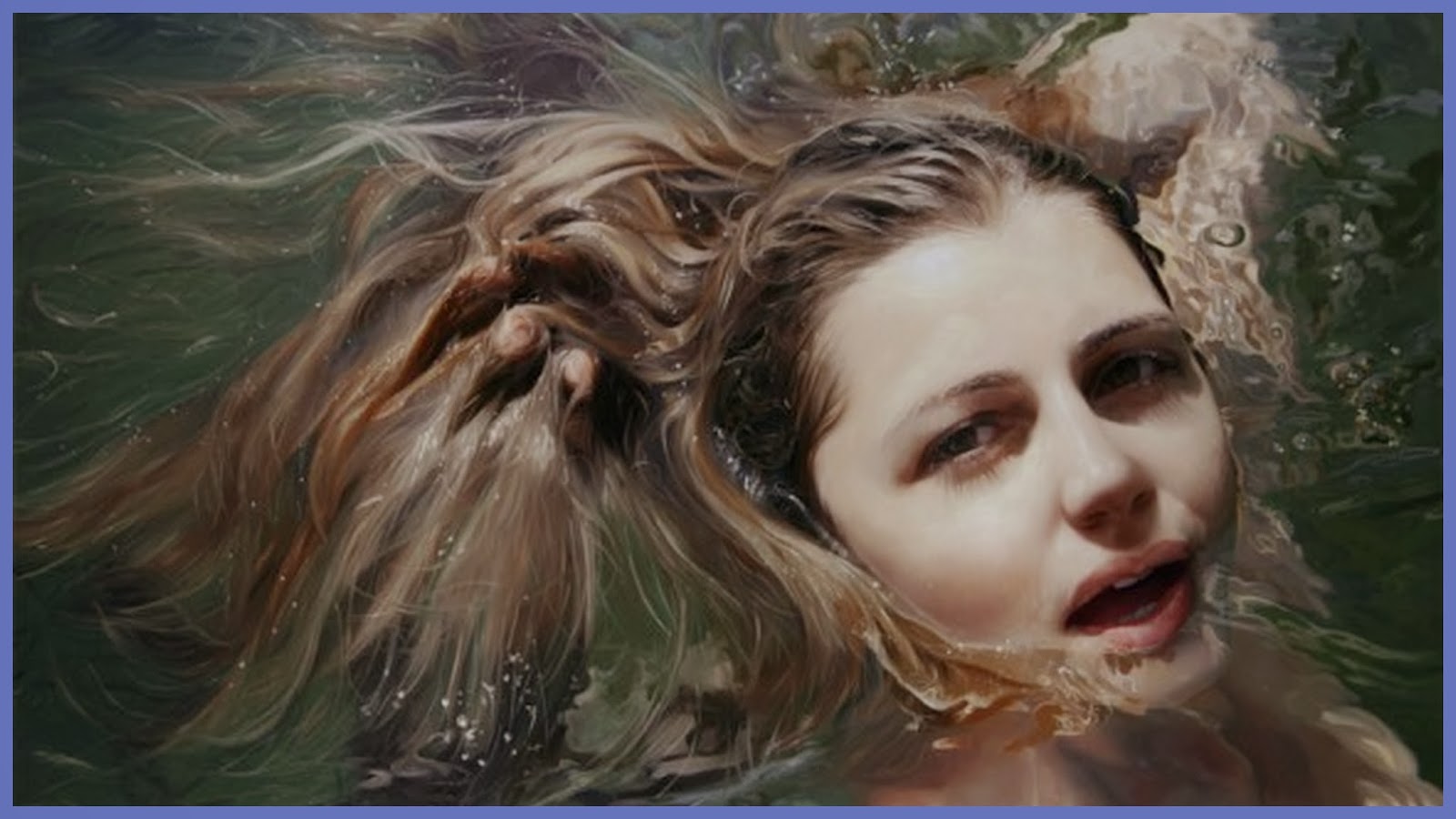
Believe it or not, this is an oil painting by Alyssa Monks 
        

With many thanks to Fascinating Pictures

I especially like the oil painting.Water is difficult to paint.
More on  Alyssa Monks here. Her work is quite incredible!


This Fake Rembrandt Was Created By An Algorithm  

Fore-edge Painting: Artists Hide Paintings Along The Edges Of Old Books  

Insanely Realistic Pencil Drawings

Found: A Missing Paul Gauguin Painting

Royal Academy of British Art Coming To Town

Australia and the UK Battle Over Historic Paintings Of A Kangaroo And A Dingo

Finally: A Digital Home For Lost Masterpieces

America: "Painting a Nation" Exhibition in Art Gallery of NSW

Chauvet Cave Paintings: Cave Women Left Their Artistic Mark

London exhibition of Australian art holds up a mirror to our nation: more iconic images
 
500 Years of Female Portraits in Western Art

Some Fascinating Pictures featuring Alyssa Monks

Visual Art of the Human Body by Cecelia Webber

Ronnie Wood: His Art and The Rolling Stones

The lost Van Gogh: Painting found in Norwegian attic is confirmed as priceless work by Dutch master

Market Find Turns Out To Be A Lost Faberge Egg

Charles Dellschau: Secrets of An Undiscovered Visionary Artist

Tom Pinch: Time - Lapse Portraits of Paul McCartney and John Lennon

How JMW Turner Set Painting Free 

The Curious Case Of The Renaissance Cockatoo

Images On Andy Warhol’s Old Computer Discs Excite University Students

Human Ingenuity: From the Renaissance to the Age of the Internet - The Sistine Chapel

Katsushika Hokusai: Japanese Artist

Picasso's "Women of Algiers" Breaks Auction Record

Looted Treasures Open Door To The Dark Nazi Past

Long-lost Caravaggio Masterpiece Found In French Attic

Frederic Remington: The Man Who Helped Bring The West To Life 

Loving Vincent: The World's First Fully Painted Film 

Vincenzo Peruggia: The Man Who Stole The Mona Lisa And Made Her more Famous Than Ever

The Isleworth Mona Lisa: A Second Leonardo Masterpiece? 

 Optical Illusions In Art

MC Escher: An Enigma Behind an Illusion             
                                             
Hidden Degas Portrait Revealed

First Faberge Egg Created For 99 Years Goes To Doha  

The World’s Priceless Treasures

Woman in Gold: Another Biopic For Dame Helen Mirren 

Australia and the UK Battle Over Historic Paintings Of A Kangaroo And A Dingo

Finally: A Digital Home For Lost Masterpieces

Could Anyone Paint A Vermeer? 

Artemisia Gentileschi - Her Biography And Her Art

John Constable Painting Sold By Christie's For £3,500 In June 2013 Will Now Go To Market To Sell For £2 million

The Pre-Raphaelite Legacy

Yulia Brodskaya:Paper Explodes With Life In This Artist's Hands

Images On Andy Warhol’s Old Computer Discs Excite University Students

Human Ingenuity: From the Renaissance to the Age of the Internet - The Sistine Chapel

Charles Rennie Mackintosh: Scotland’s Greatest Architect

David Bowie's Personal Art Collection Auctioned Off For $30 Million